


Customer experience has a connection problem. AI won't solve it alone.
At Crafted London, customer experience expert Ken Hughes challenged businesses to rethink what customers actually want, and why the future of CX depends less on technology than on how people feel.
A customer can complete a transaction in seconds, navigate an app without friction, and get exactly what they ordered. And still feel absolutely nothing about the company that delivered it.
That's the uncomfortable truth facing businesses investing millions in digital transformation. They've become exceptionally good at removing friction. But somewhere along the way, they've confused efficiency with connection.
At UserTesting's Crafted London event this past September, Ken argued that the next competitive advantage won't come from faster transactions or smarter interfaces. It will come from making customers feel something.
And increasingly, that's what separates businesses people use from brands people love.
The customer is the center of the universe
Remember paper maps? You had to figure out where you were, identify your destination, and navigate the route yourself.
Google Maps reversed that relationship.
Now, a little blue dot sits at the center of the screen. Move left, and the world moves with you. Change direction, and the route recalculates.
Ken calls this the "blue dot consumer."
"They stand perfectly still in the center of everything," he explained. "Everything else revolves around them."
Insight+
Get on-demand access to some of UserTesting's most popular events, including from Crafted Seattle and Crafted London. Register for Insight+ and start watching today.
It's a useful metaphor for modern customer experience. Customers increasingly expect products, services, and businesses to adapt to their lives, not the other way around.
Uber brings the car to you. Netflix brings entertainment to your couch. Grocery delivery eliminates the supermarket trip.
The lesson for product teams? Stop designing experiences around internal processes and start designing around the people using them.
That requires understanding customers before building solutions, not simply testing whether those solutions work afterward.
Customer satisfaction is the starting line, not the finish
Here's another uncomfortable question: What if your customer satisfaction scores are measuring the wrong thing?
Ken challenged the assumption that meeting expectations represents success.
"If your research is looking at, are we meeting expectations? I would argue you're measuring the wrong thing," he said.
His argument is simple. Customers expect digital experiences to be seamless, reliable, and convenient. Delivering those things doesn't necessarily create loyalty. It merely keeps you competitive.
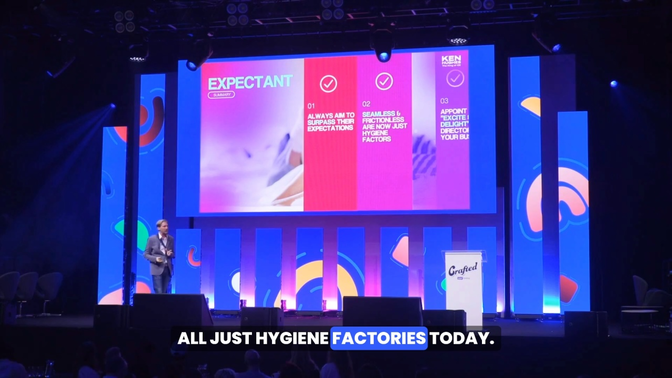
To illustrate, Ken shared a story about a Virgin Atlantic employee helping a young boy whose family was moving overseas. The boy arrived at the airport carrying his pet goldfish, which couldn't accompany him aboard the aircraft.
Rather than simply explaining the rules, the employee invented a special arrangement for the fish. She then coordinated with a colleague at the destination to reunite the boy with a similar-looking goldfish.
The story illustrates Ken's larger point: Memorable customer experiences aren't necessarily expensive or technologically sophisticated.
They're thoughtful.
And they give customers something worth talking about.
For researchers and designers, that suggests expanding the questions we ask. Beyond whether users can complete a task, consider whether the experience creates confidence, reassurance, or delight.
AI should create more human moments, not fewer
Artificial intelligence promises to fundamentally reshape how consumers discover, evaluate, and purchase products.
Ken believes AI agents will increasingly handle much of the searching, comparing, and choosing that customers traditionally do themselves.
That puts greater pressure on the remaining differentiators: experience and advocacy.
BENCHMARK
AI Relationship Quality
The UserTesting AI Relationship Quality (ARQ™) benchmark gives you a clear measure of how well your AI experience is working for customers
But there's a paradox. As businesses automate more interactions, they risk removing precisely the human elements that make those experiences memorable.
Ken described a healthcare example in which AI-powered documentation allowed doctors to spend more time looking at patients rather than typing into computers.
The technology handled the administrative work. The physician could focus on listening.
That's a more useful way to think about AI adoption than simply asking how many tasks can be automated.
"The trick really is to let the technology do what the technology does well and let the humans do what the humans do well," Ken explained.
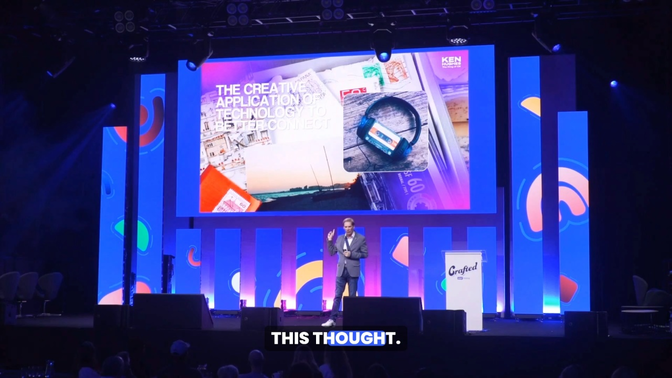
The opportunity isn't automation for its own sake. It's using technology to create the space for better human experiences.
From transactions to relationships
Ken's final challenge was to move beyond customer experience toward what he calls customer intimacy.
Traditional customer service gets the basics right. Customer experience builds preference. Customer intimacy creates belonging.
Consider Taylor Swift. Her success isn't simply about producing music. It's about creating an unusually personal relationship with millions of fans who feel connected to something larger than themselves.
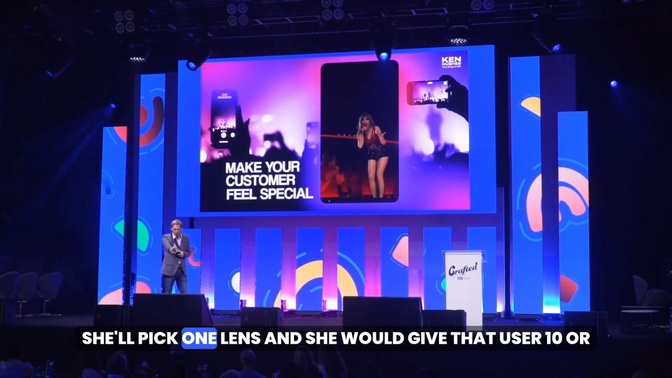
Businesses can learn from that approach without expecting customers to tattoo their logos on their arms.
It starts with treating relationships as something to build rather than transactions to optimize.
For product and UX teams, that means measuring more than usability and satisfaction. It means understanding whether experiences build trust, deepen relationships, and give customers a reason to return.
AI can help companies deliver those experiences at scale. But it can't decide what meaningful connection should look like. That still requires listening to customers, understanding their needs, and exercising human judgment.
As Ken put it, "The answer is fostering a sense of closeness with your customer, that they belong to your tribe. And you can do that with a deep and meaningful user and customer experience strategy."