


Get access to all premium content
Track : Driving growth and innovation
Building What's Next in the Age of AI, Together with Our Customers
Presenting:
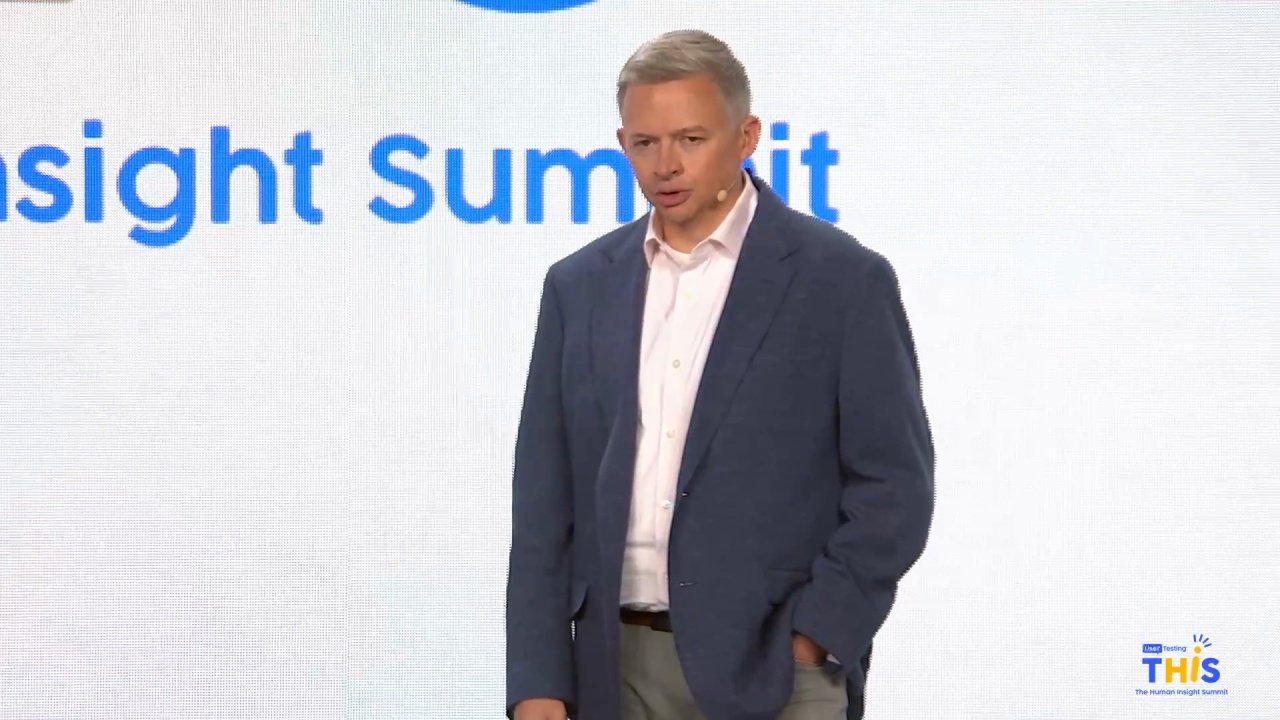
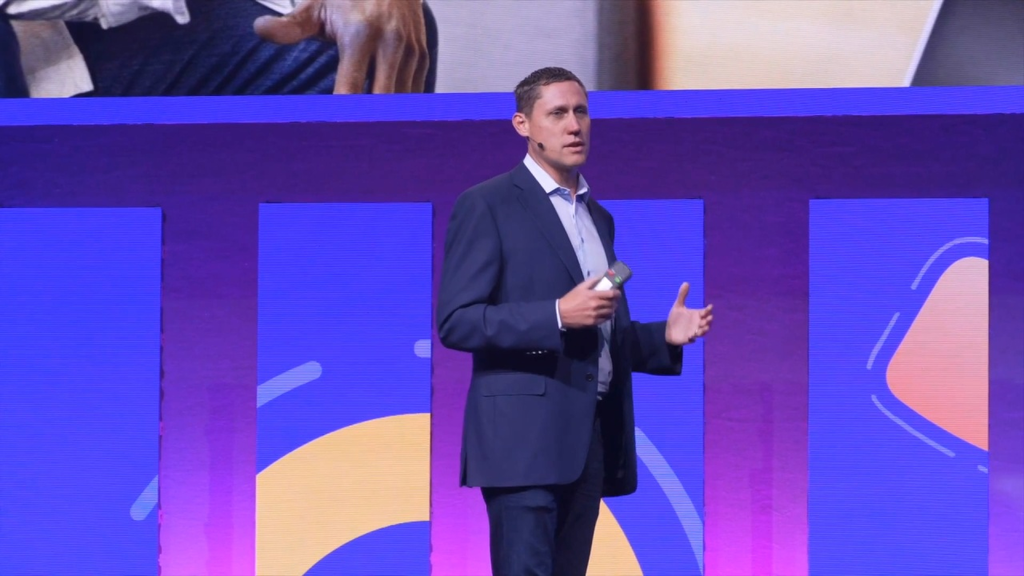
Eric Johnson
Chief Executive Officer, UserTesting
Baran Erkel
Chief Strategy Officer, UserTesting
The pace of how products and experiences are being built right now is unlike anything we've seen before.
Over the past year, Eric Johnson, CEO of UserTesting, has spent more time listening than talking. In candid conversations with customers, he's heard what's working and what isn't, and it's changed how the company is building for what's next.
In this opening address at Crafted London, Eric will be joined by Baran Erkel, Chief Strategy Officer at UserTesting, to reflect on what we've learned and how those insights are reshaping UserTesting. As teams move faster than ever, they'll share how UserTesting is evolving into an embedded, AI-powered decision and validation system, helping modern builders and creators ground AI-assisted development in real customer behavior.
What matters isn't how fast you can build, but whether you're building the right thing. Build fast. Build right.
Speaker 1
And now please give a big welcome to our emcee for the day, Amrit Batuu.
Good afternoon, everybody.
It is really weird to have myself introduce myself on stage, but here we are. I am Amrit Batshu. I'll be your host for the afternoon. How are we all?
I'm gonna take that as a post lunch response. Let's try that again. How are we all? Excellent.
We've got an action packed afternoon ahead for you guys from people who are from internally within user testing speaking with you, and we've got some great customer stories as well. First...
Speaker 1
And now please give a big welcome to our emcee for the day, Amrit Batuu.
Good afternoon, everybody.
It is really weird to have myself introduce myself on stage, but here we are. I am Amrit Batshu. I'll be your host for the afternoon. How are we all?
I'm gonna take that as a post lunch response. Let's try that again. How are we all? Excellent.
We've got an action packed afternoon ahead for you guys from people who are from internally within user testing speaking with you, and we've got some great customer stories as well. First up, we've got our CEO, Eric, coming along. He's gonna tell you a bit more about his listening tour. He's been going around listening to a lot of our customers.
He's gonna tell you what we've been hearing from those kinds of perspectives. And he's gonna tell you what he sees as being next in the age of AI. It's a really cool talk track, I'm definitely looking forward to it. Get your notepads and pens ready and we'll chat to you all in a bit as well.
Speaker 2
Thank you.
Speaker 3
Alright. That music was a little loud there. Had to wait for a second there. A little pause.
And the stage is really tall. I'm not used to being so high up. And I'm gonna stand a few feet back because I don't wanna fall off and break my ankle. That would be bad.
So I I actually came here from Bellevue, Washington and when I got out of the hotel this morning, I saw some rain and it kinda felt like home. And I was worried that we may not get a lot of people coming. Often when it gets a little wet here, traffic gets bad and it doesn't go so great. So I am really pleased that so many people are here.
Thank you everyone for coming and spending the day with us. What I'm gonna do in my very brief remarks is put a little bit of a context on where we're going as a company and what we're trying to do for all of you And where where we see the industry going. So first big point here and this is something that I think has really become our theme as a company.
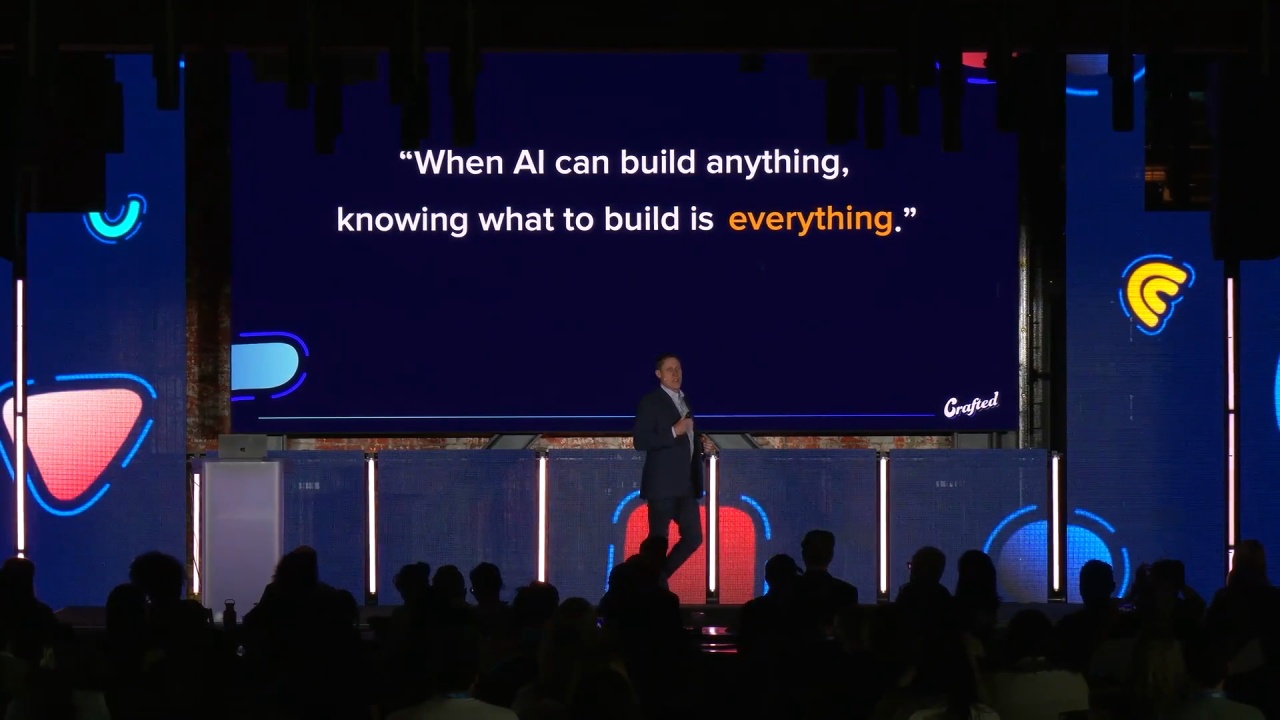
Things have changed dramatically. You know when AI can build anything, knowing what to build is everything. I've been in the technology industry roughly thirty years. And the entire time until about a year ago, the constraint was always our capacity of engineering. How many engineers? Could we get the right ones?
And what would what could we do then given what we had?
Now, with Agenic coding, we can all work so fast the constraint is no longer engineering capacity. In fact, some of the companies that we serve and some of the other CEOs that I know are literally in a situation where they are effectively road map zero. They've exhausted everything that they thought they were going to build. All their feature backlog, their defects, their ideas, they've they've worked it.
Now, then what becomes really critical is knowing what to build. And that's where where we come in and what we're trying to work on. Now, what I've done personally over the last year is I spent a ton of time on the road. And not just me, but our team overall.
Nothing is more important than being out in the field with our customers and potential customers that we would love to have. And we learn a lot when we do that and I think the last year in the world has been one of dramatic change. And so when I think about the discussions that both myself and others have been having, I personally met with a few 100 customers during that time frame. There's a few themes that emerged.
And those are the themes that we're building and running our business on the back of.
First one is obviously you all are changing your processes.
With AI, with these different tool sets, the genetic coding, the AI product development life cycle. Everyone is trying to change how they build and how they create.
And that has some dramatic implications. When I started here a couple years ago, we primarily served UX researchers. And we still have tons of researchers and we love researchers. We were starting to do some work with designers, occasionally product managers and sometimes some work in marketing.
That has now dramatically accelerated. Nearly every company that we talk with and I personally have met with is the roles are blur blurring.
The differentiation between a researcher, a designer and a product manager, they're becoming builders. And the builders need to go really fast and they have become in some organisations, in many organisations frankly, a little bit of the bottleneck because engineering has gotten so much faster. And so how do we help serve you with the insights that you need? And how do we serve you in the new ways?
So one of the second themes related to that has been is I get a lot of customers saying, hey you see so many people, help us. Like you've got the expertise. And so one of the areas we've invested a lot in is the experts. And so our services organisation, we've added quite a few more people.
And some of these things are paid. Some of them are unpaid. We have a new role called an insights partner.
And we are trying as much as we can to get out in the field, take our learnings and help you all do what you do better. And we want to meet you where you're at. Not every organisation is the same. People in this room are representing almost every vertical there is available.
Some of you are in highly regulated industries. Some of you serve as consumers. There's a huge variety in what you do. And we wanna meet you where you're at, and we wanna help your business succeed.
And so we're investing in those services and those capabilities, expert capabilities.
Third thing is you want as much AI in our products and services to make it as easy as possible for you. And so we have been looking at every aspect of what we do and trying to simplify how you can work with us. And it's especially important as these roles blur, lots of people who now work with our technology and need these human insights.
You're gonna go and you're not gonna go into the UI. You wanna work with us agentically. And so things like MCP server matter a lot. And then finally, the one thing that has never changed and has been true the entire time I've been here is you need to have the insights from the right people. The most important part of what we do is actually finding the right individuals, the right humans to give that input. And so investing in the network, investing in our participant network has been vital and been critical. And I'm pleased to say that with the investments we've made, we believe clearly we have the best participant network in the world.
Our participant network via our own efforts over many years combined with the acquisition of user interviews, we now have over seven and a half million people across I think it's 40 plus countries, languages, different verticals, professional skills, and an ability to go help you find exactly who you need. The other thing we've invested in along with this is making sure that to the extent you want to manage your own network, we have capabilities now that are much more robust to do that with a product we call Research Hub.
Now, the important part of all this is what it does. And so having the world's best network is allowing us to allow you to make these insights and have these created incredibly quickly. And by having that, it allows you to build lightning fast in your organisation. And not just to build, but to build the things that actually matter and are gonna make a difference.
The innovation engine has dramatically accelerated here. So about six months ago, we brought in a new CTO and then over the last really year combining efforts from that CTO, Jennifer Arderbain, some of the leaders you're gonna see here and many of you have know, we too have been implementing our AI PDLC. And those changes have been substantial. When I first got here a couple years ago, we only released innovation every quarter.
It felt honestly kind of slow. And over the last few months starting in May, we now release innovation weekly. And in fact, honestly some weeks, multiple days. And so the pace of innovation hopefully you're seeing over the last five or six months has dramatically accelerated.
And I think that's gonna continue. Some of the things that you're gonna see today, Bahran's up next. He's gonna talk a little bit about where the world's going a little more more deeply than I am. After that, we're gonna do a bunch of demos.
And so one of the things you will see is the MCP server.
We put a lot of work into making it really easy for you all to interact with our platformigenically. And so we're gonna sew some of those capabilities.
One of the other requests we had, and it makes total sense, often times you want to do and get a lot of qualitative research done or insights done at scale.
AI moderation is really helpful in doing that. And one of the things we consistently heard from you all, our customers, is that instead of having to buy another capability for that, you'd love to have AI moderation baked right in our core platform. And so that's one of the areas that we are in fact I think the first release of that is in two weeks on September 30. And so we're gonna show you some of those capabilities and where they're gonna go. So the innovation engine here is definitely fired up.
And what this all comes down to is you need to build fast and you need to build things that actually deliver customer value. And and that is the most important part. It's not just about going fast and building anything. It's going fast.
It's building with quality. It's building things that actually deliver on what your customers need and are willing to pay for. And that's our whole mission in our business. And what I'd like to do now, my part's really brief.
I get the simple part. When you're the the CEO, you can pick what you do. I pick the little section and then I give it over to the team to do the real meat. And so next up is gonna be Beran Arkel.
Beran's our chief strategy officer. He's gonna go in deep on our a little bit more on our strategy, where the world's going. And then we're gonna get hands on with product. Beran.
Speaker 4
Thank you, Eric. Hello. My name is Baran. I'm so excited to be here to talk about the vision that we have for the future of customer insights in the AI era.
First though, I want to talk about a conference I was at last week.
This conference was called the Lenny and Friends Summit.
It was the premier conference for product leaders and experience leaders. And it was in San Francisco last Thursday, a week ago today. And it was fantastic. Exceeded all expectations for me.
And I'll tell you why. First of all, who was there? Product leaders from across, the best companies pushing the limits with AI, the CPO of Anthropic, Chief Product Officer of Atlassian, the Head of Design for Stripe, the CEO of Linear, Head of Product for ChatGPT and Codex, over 2,000 people.
And it was a blast, and I was so energized to come here and talk about it.
The reason was because there was one main theme throughout all the talks, throughout the dinner that we hosted the night before, two round tables that me and some colleagues hosted, and that theme was all about the importance of understanding your customer, understanding your user in the age of AI.
And that it's the most important thing, the most important thing right now.
Claire Vaughan gave a killer opening talk, standing room only, 2,200 people in the room.
And she talked about the conviction required to move forward these days.
She said, for the first time, our capacity to build exceeds our conviction for what to build. For the first time ever. Claire is a phenomenal product leader. If you don't know her, if you're not on X or Twitter, she's a three time chief product officer and technology officer.
She now runs two or three companies. I can't keep up. She hosts a podcast. She's pushing the limits with AI every day and consulting with the world's best companies on how to transform their product development organizations.
This was the theme of her whole talk, and I had a big smile on my face. Because what is this? This is what Eric just said.
We say this slightly differently, when AI can build anything, knowing what to build is everything.
Now, I've been talking to product leaders, design leaders, research leaders for over two years now.
And I've been trying to understand how they're thinking about adapting to AI, the AI era. What's changing for them? What's important? What are their challenges? And there have been two main themes, and it's these.
How software is built, is changing fundamentally, and what software is becoming is changing fundamentally.
The first one is about process.
How we do things, how we organize the tools we use.
The second one is about the very nature of product and product experiences.
Let's dive in a little bit on both of these. How software is built. In the pre AI era, engineering was the constraint.
Engineering was the bottleneck for everyone, for as long as I can remember. I've been in software close to thirty years. I started out as a software engineer.
It was always, how long is this going to take to build?
And everything else had to fit around that bottleneck. Everything else like strategy, discovery, user feedback had to fit that.
In the post AI era, what we're seeing from teams that are pushing the envelope, using the latest tools, and what I think is going to be true for all of us, matter where you are on this journey, is that engineering is no longer the bottleneck.
Insights are.
When you can build so much faster, produce so much more, more than even the users can probably absorb, deciding what to build is so much more important.
Not just for your roadmap, but for your competitiveness, for your differentiation, for your value proposition.
So we go from an engineering constrained world to an insight constrained world.
And the leaders, product and technology leaders of organizations used to ask the main questions on their mind, where can we build this and of course, how long is this going to take?
Now that's changing. It truly is. And the main question they're asking is, do we understand the customer well enough, the user well enough to know what to build, to know how to win.
I get really excited about this because this is how we, all of us in this room, can help move our organizations forward.
The second big change, we talked about the process of how we build. Second one is what we're building.
What software products are becoming.
They're becoming very different things.
In the pre AI era, we know what software was like. It was a tool, users gave commands, menus, buttons, clicks, predefined flows, and they got some outcome or got some action more so. What was important was usability, functionality features, performance, all the things we know, the things we're expert in evaluating, the things we're expert in designing, researching, etcetera in this room.
The world's changing. I think we all know that. We've been using a lot of these tools and I think all of our products are going to be changing in this way.
To where we go to a place where users say what they want and expect an outcome. They no longer want a tool, they want outcomes.
And these products will look more like relationships, where users express an intent, they work together with these agents, with these AIs, they expect outcomes. So what becomes important? The quality of those outcomes. The control the user feels when they're doing this work.
And then, the trust that they place in that product, in that experience, in that partner.
This is Victor Yoko, an author and a UX researcher at ServiceNow. Great company.
He describes it this way, says, we are not just designing interfaces, we are architecting relationships.
Kat Wu, the head of product for Claude Code and co work, some of the fastest growing products in history over the last year or two.
The personality is what makes Claude so great at so many things. It's so core to the success of Claude.
Architecting relationships, personality. I don't know about you, but that's not how I talked about software products for the last twenty, thirty years.
It is an exciting, interesting new world. So what does this all mean for us? So what? What's the impact?
What do we do with this? Well, one thing that it means is that we, if you're not already feeling it, are going to be inundated with decisions. We're going have so many more decisions to make.
When we can build anything, we're going have to decide what's worth building and what's good and what's not.
This is going to lead to a problem. It already is for some of the forward leaning organizations pushing the envelope with AI coding and product development.
Decision volumes are going go up.
Evidence around what users like, what users want is going to stay flat if we don't change. And that difference on the chart is the insight gap.
And if we don't close that gap, things are not going to end very well for our organizations. It's an imperative to close the insight gap.
How do we do this? We thought a lot about this. I spend every waking hour thinking about this, talking to people, reading about this. And I truly believe we need a new operating model for insights.
We need to take insights from being a project based activity to infrastructure for our organisations.
Insights need to be in the build loop continuously. They need to be always on, proactive and always on, and they need to be open to everyone.
This is the way we take insights from tools and projects to critical infrastructure to move our organisations forward and win in the age of AI.
There is another key to this new operating model for insights, which is understanding how to evaluate AI products, how to evaluate agents.
How do we know that they're good?
Besides throwing them out there and seeing if people use them and come back and like them, Give us a thumbs up or a thumbs down in the app.
Well, thankfully, our fantastic researchers have been working on this question really hard, and they've developed something we're really, really proud of.
So today, I want to introduce ARC AI relationship quality. ARC is a structured way to measure the effectiveness of your AI products, and how much users are likely to adopt, come back, and the holy grail, tell their friends about them.
It looks like five dimensions to measure these products in a structured way.
Understanding, trust, control, outcome and affinity.
And the cool thing is this is not just a new piece of technology, another module, a feature.
Our professional services team actually works with you and is working with customers today to help them evaluate their products, to help them apply ARC to their AI product, their audiences, their business goals.
You get an overall benchmark, scores across each of those five dimensions, direct evidence from customers, and a clear view of what to do next. What's the next step? What's the next decision?
ARC is available now, and we're so excited. If you're interested, if you're excited, we'd love to talk about it with you. I think we have team members available at the booth throughout the day.
Bringing this all together, our vision for customer insights in the AI era is pretty straightforward.
We want to centre the user, centre the human in all of our decisions, and make insights infrastructure for all of your organisations.
Our strategy to deliver on this vision is also pretty simple.
In this diagram, there are three layers.
Number one, the foundation. As Eric talked about, getting our customers the specific people to get feedback from is foundational, and that's why we invest so much in the network. We have the network and we have a team of experts to find you, anyone that you want to talk to.
The second layer is about helping you ask any question and get the data and do the analysis that you need to answer that question, and make a decision through the user testing platform.
And the third and top layer is the interface layer. We want to make this capability available everywhere and anywhere that your teams, your colleagues, you are working. That might be the user testing app, that might be Claude, that might be Claude code, cursor, codex, that might be specific tools like Figma design, Figma make. This is our vision, this is what we're working on, this is what we're going to show you progress towards today, and this is why we're so excited.
I truly believe that this is the moment human understanding becomes the most important thing.
I think us in this room, we've always known it's been an extremely important thing. I think now everybody else is getting the message that it will be the most important.