



Get access to all premium content
Track : Driving growth and innovation
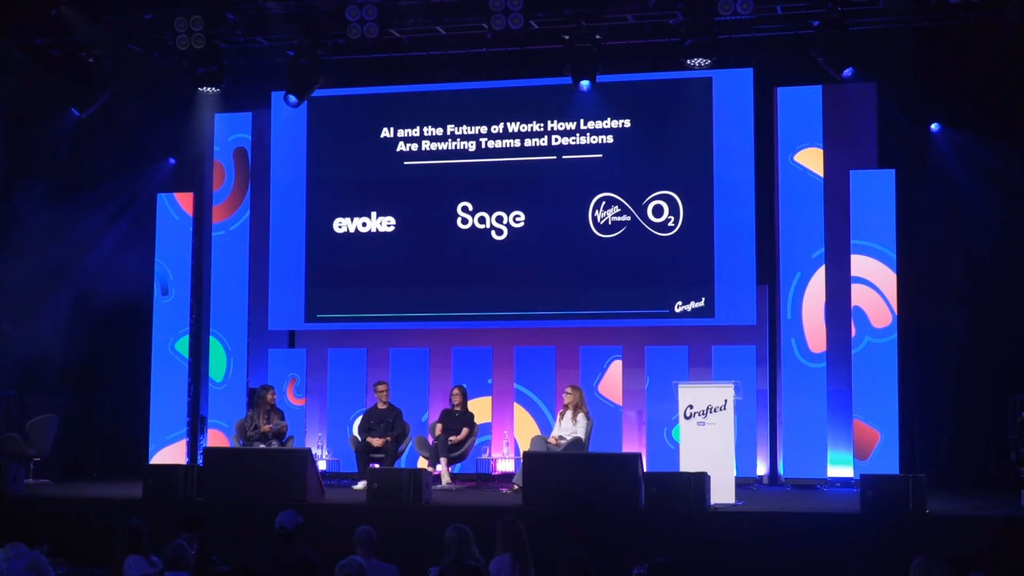
Panel | AI and the Future of Work: How Leaders Are Rewiring Teams and Decisions
Presenting:
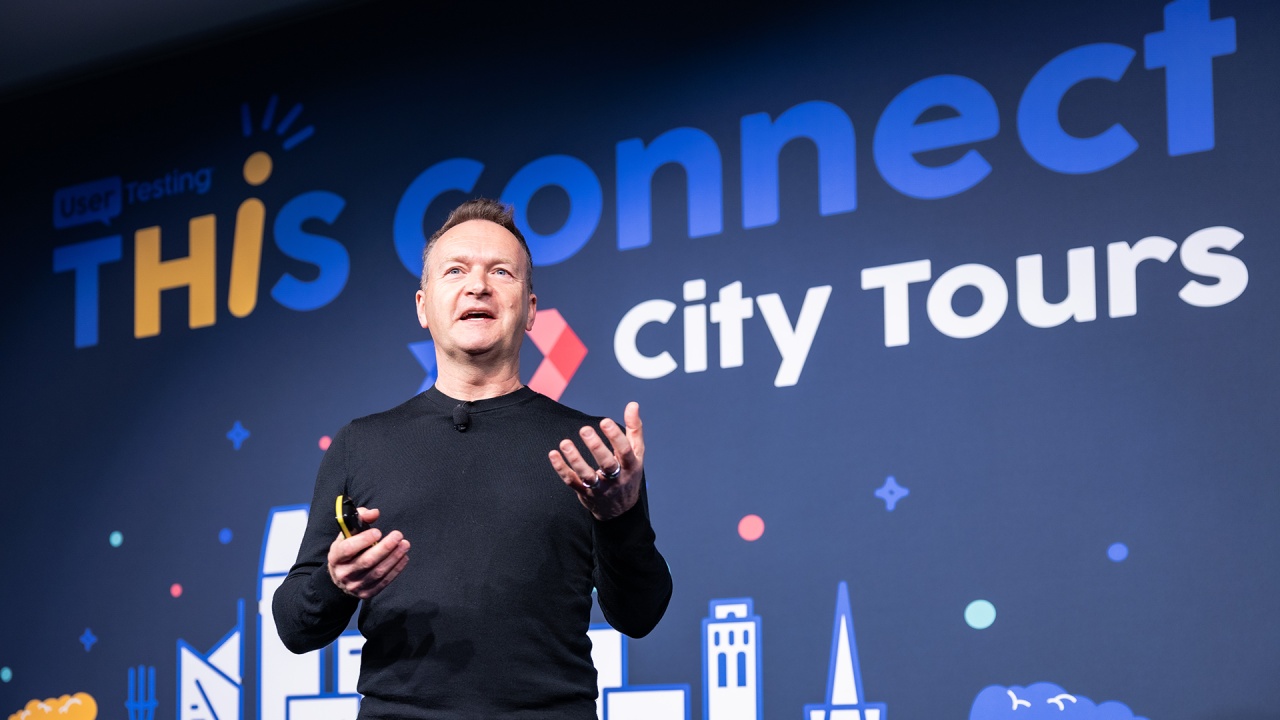
Alan Conlan
Director of Product Design, evoke
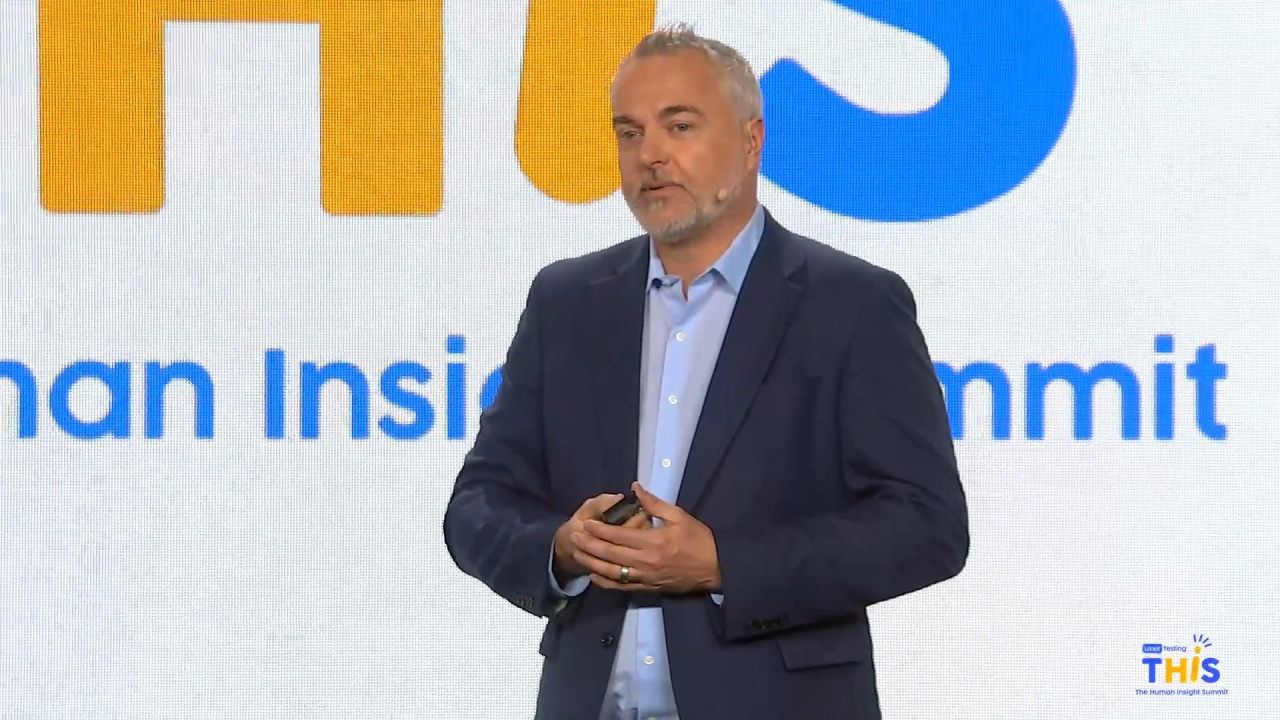
Ranjitha Kumar
Chief Scientist, UserTesting
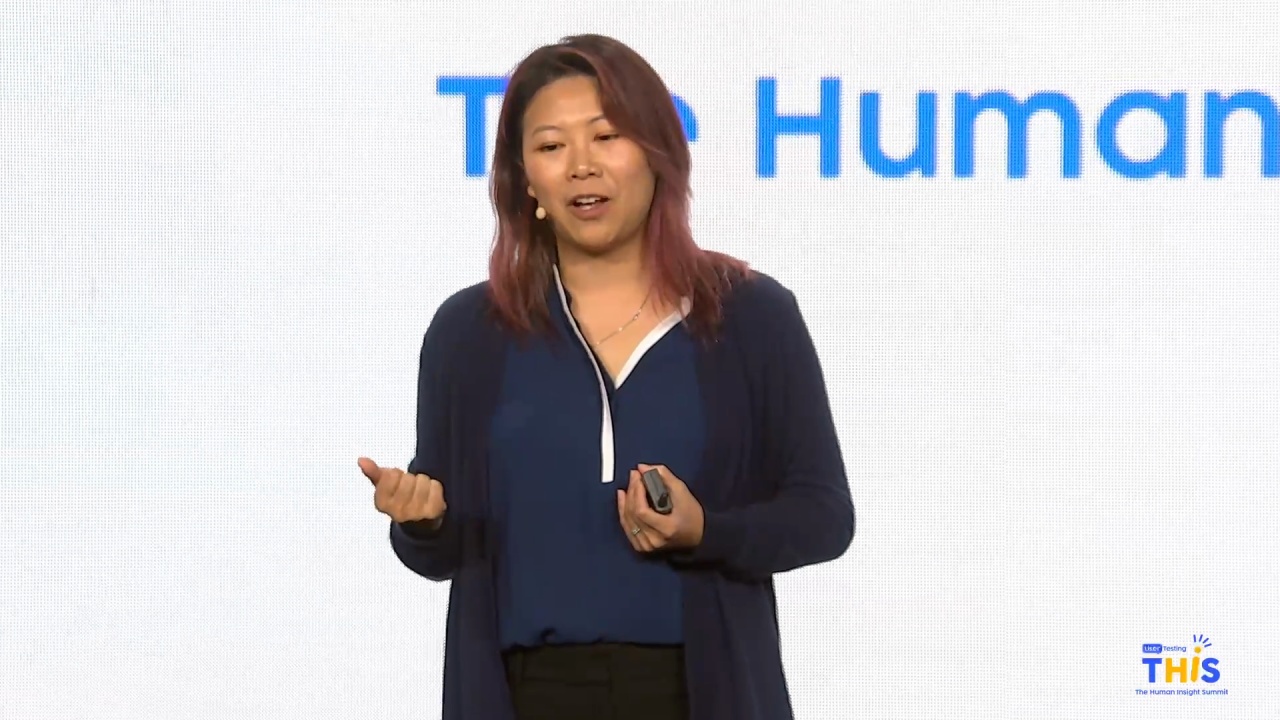
Susan Liu
Global Digital User Research Lead, Sage
Vanessa Barone
Head of Digital Product & AI Ecommerce, Virgin Media O2
AI isn't just changing how work gets done, it's rewriting who makes decisions, how fast, and on what evidence. In this panel Ranjitha Kumar, UserTesting's Chief Scientist, brings together cross-functional leaders on the front lines of this shift to dig into the questions every team is wrestling with:
- How is AI reshaping workflows and decision-making, really?
- Can teams move faster without quietly taking on more risk?
- As AI gets embedded everywhere, where does research still live?
- What does "good" actually look like when insight has to inform decisions at scale?
Speaker 1
We've done this a couple of times already, so I'm expecting to get it perfect first time this time around. Are we ready for the last part of the session today?
I feel like we can do better. We've got a lot of Americans here. The Americans are really good at showing enthusiasm and shouting and screaming. I wanna show that we can do it as well here as they can over there. So are we ready for the last part of the session? Awesome.
Before we do move on, did anyone get a chance to have any...
Speaker 1
We've done this a couple of times already, so I'm expecting to get it perfect first time this time around. Are we ready for the last part of the session today?
I feel like we can do better. We've got a lot of Americans here. The Americans are really good at showing enthusiasm and shouting and screaming. I wanna show that we can do it as well here as they can over there. So are we ready for the last part of the session? Awesome.
Before we do move on, did anyone get a chance to have any cakes during the break?
No?
I missed out on them. I was absolutely devastated. But maybe that's a good thing.
I did break
Speaker 2
the stage earlier on during
Speaker 1
the side workshop.
Right. Okay.
So, the next the next conversation as you can see what he sits in front of us is a is a panel conversation. We're gonna have Ranjita Kumar, our Chief Scientist at User Testing as the moderator for the conversation. We've got Alan Conlin, who's the director of product design from Evoque. We've got Susan Lou, the global design user research lead at Sage. And we've got Vanessa Barone, head of digital product and AI commerce at Virgin Media o two. So could we please welcome everybody on stage.
Speaker 3
Hi, everyone. Welcome.
I'm Rajeeva, Chief Scientist at User Testing, where I'm Media and Strategy. We're very excited today to welcome Ellen Conlin, Susan Liu, and Vanessa Barone, product research and design leaders at their companies. And we wanna kick off this conversation around the future of work in AI.
So I'm gonna have each of you do a little intro. Talk tell us about your company and your organization. So Alec, wanna start?
Speaker 4
Sure. Thanks, Regina. Hi, everyone. I'm Alec Holland. I'm the director of product design for Evoque. Our brands include Mr Green, eight eighty eight, and of course William Hill, which you'll recognize from the British high streets, of course.
Voice in here as well is Irish, so I'm hoping there's a couple of friendly Irish voices in the audience. Anyone else from Ireland? Yes. Thank gods. Traveler packs.
A team of 25 designers and we've got two researchers and we are very much on an early stage in our AI journey as well so hopefully, like everyone else, I'll have a few practical examples to share.
Speaker 2
To me, Susan.
Speaker 5
Hi. My name is Susan. I work for Sage. Sage is a global SaaS company. They specialize in developing finance, HR, ERP, and software. I am the global digital user research lead.
Speaker 6
I and I manage
Speaker 5
a team of five user researchers.
We facilitate all of the user research for sage.com, new customer acquisition, ecommerce journeys globally for all markets. I've been at Sage for five and a half years. Prior to Sage, I was at Virgin, let me, about fifteen years, when a less Virgin when he earned his medical diagnosis. Over to you, Vanessa.
Speaker 3
Hi, everybody. My name is Vanessa.
Speaker 6
I work at Virgin Media o two, which many of you probably know as one of the big UK telcos.
Myself and the team look after virginmedia.com, which is the acquisition website for broadband products.
Yep. That's me covered basically.
Speaker 3
Awesome. Well, I wanna kick us off at a high level.
You know, the way that AI is transforming work is top of mind for everyone. So what does your team actually do differently today because of AI that you weren't doing, let's say, two to three years ago? And we're gonna start with you, Vanessa.
Speaker 6
Yeah. Sure.
I mean, I think AI has changed fundamentally how we work, the pace at which we work, and how we view ourselves as at work. It's a very human thing.
More practically speaking, I think I'm seeing it sort of from two lenses. From an enterprise perspective, there is now systems and structures in place to support AI adoption and implementation.
So as of now, at the m one two, we have the data science team who basically functions as a center of excellence, and they support the scale scaling and adoption of AI across the business.
And I I think something that's very different from two years ago is people's willingness to experiment, and that could be on a local team level and also on an individual level.
Speaker 3
And, Susan, is that similar for you at Sage?
Speaker 5
Yeah. That's a great question. So two years ago, I think AI was something that we were asked to start using.
I think maybe about a year ago, it became like a really great individual productivity tool. I think what's changed two years on now is that I think at Sage for us in digital, it's very much become a part of the customer knowledge infrastructure.
We're seeing a lot more kind of experimenting with AI. We're building a lot more agents to help connect people to research. And I think that's a really great that matters a lot for us because I think the organization has an abundance of insights and research. So the challenge is to connect people with that brilliant research that already exists. So we're really kind of leveraging that capability to help you know, access and enable and connect our stakeholders to the insights when they need it the most.
I feel
Speaker 3
like we're already hearing themes emerge, experimentation, customer knowledge, infrastructure.
Alan, what do you think? Is is that similar for you as well?
Speaker 4
Yeah. It's very similar for us. You know, two years ago, we had the decree from on high that we need to use AI.
Nobody had licenses, nobody had credits, nobody knew what to do or where to start. So we've all gone on this journey of trying to work out how we go from simple experimentation and curiosity into space now where we're trying to work out how to scale it so that the whole team can benefit from it and that we're all not starting from a blank page anymore, that actually we've got some infrastructure that's starting to be built up in place. It's taking time and taking efforts. So in those two years it's been a whirlwind, but it's been really good.
Speaker 3
Vanessa, you mentioned experimentation and so did everyone actually, but and some of you mentioned that it came from, like, a top down mandate. But before that top down mandate, do you feel like there were people already experimenting and really the top down mandate came later? Or I mean, do you feel like there's the appetite for everybody to be using these tools? Or do you feel like it is coming from the leadership level?
Speaker 6
I think for us anyway, it's kind of a mixture of the two.
I think the business was really pushing us to just go at it, if I'm honest. Now they've kind of ranked it in in terms of, like, enterprise tooling. So we have technology partners, and everyone has licenses to Copilot and Gemini Enterprise and things like that. So they've managed to bring it in a little bit. But before that, teams were were free and able to to kinda do their thing, and it was considered positive for sure.
Speaker 3
Throughout today, I felt like a a theme that everyone's brought up is that with AI, everyone now can be a builder. So designers can code, researchers can prototype, PMs can create working experiences.
Do you feel like that's actually happening inside your organization? Maybe we'll start with you, Alan.
Speaker 4
Yeah. Like, it definitely is happening, but I think we need to be really realistic here. You know, we're not true builders. We're more like DIY artists that are playing around, we're able to fix a hole in the wall or we're able to fix something in house, but it's not gonna be something that is big enough to stand up to the scale that's needed.
We have millions of customers on our sites at particular times that needs to be able to handle
Speaker 2
that level of traffic.
Speaker 4
So like we are building things that help us to have conversations with them for else, but they're not stuff that is going to help us to really roll out into production straight away. And it's in those moments of conversation that we're able to go, is this what we mean through the prototypes that we make?
That's where I think the value in in prototyping is.
Speaker 3
Susan, I know you've talked a little bit about prototyping. Do you feel like that's where the value comes in, is at that layer?
I love this
Speaker 5
question because for me, I think AI has democratized participation in the creative process rather than it democratizing expertise.
If I look at, you know, ideation sessions, what we see now is stakeholders being able to create a mock up or a prototype in seconds, whereas in the past we would maybe struggle to we may observe them struggling to sketch or communicate their ideas. So I love that AI has enabled a lot more participation from stakeholders to communicate what they're thinking and I think that helps to reduce the interpretation gap, which I think is very, very important for scaling impact. So I think the value is about just enabling participation.
And although people can create something that looks like a product, as Alan once said, it doesn't mean that it's an actual production ready product. We still need to involve the necessary expertise and professionals to add that level of governance to ensure that it scales responsibly.
Speaker 3
So what I'm hearing is maybe AI has enabled this new type of design material almost that design research product engineering. We can all speak the same language in a sense.
Now I I I see the upside of all of that, obviously, but do you feel like there are times where because the lines are blurring that creates internal friction.
And, like, how do you deal with that?
Maybe yeah. Anyone who who feels like they wanna share about that.
Speaker 6
I think yeah. I mean, I personally don't think that it should be viewed as a negative thing. For me, it's more a conversation starter and a means of communicating more effectively. Some people communicate better overwritten word verbally or visually. And having something that is more tangible and illustrates an idea, I think it will get you to a solution far more quickly, and I think AI is enabling that, which is super positive.
For our team, some examples have been like we have a BA who created a working prototype of a feature we wanted to build, and she just presented it back to the development team to basically validate the logic and give them sort of an illustration of what it might look like and how it might work.
We had a designer as well on the team who created a tool to synthesize user research insights, and it's basically a template with charts and graphs, and it's just very digestible for a stakeholder to pick up and understand, you know, here's a test, here's what is produced, and here are the results. So I just think it makes conversations much more meaningful and you're not having to do sort of that like elongated process of trying to understand what someone means if they can use all these tools to help them convey their message a bit more quickly.
Speaker 5
Yeah.
I think
Speaker 2
sorry.
Lost some James still there.
Speaker 3
No worries. No worries. Alim, anything you wanna add?
Speaker 4
Yeah. Look. I think the danger is obviously is when somebody whips out a prototype and starts comparing conversation, it's like mine's better than yours without any evidence.
But so long as they understand that this is a conversation starter and that is something that we can all work together on
Speaker 2
to find the right solution for our customers.
Speaker 4
We've definitely had some early days, times when people have brought prototypes into rooms and went this solution and this
Speaker 2
is the only thing that we're building.
Speaker 4
And there's an education piece there that we have to go through.
Great power comes great responsibility. We need to make sure that people understand that stuff that they're building isn't necessarily suitable for a customer, business or actually maybe it can't be built at all technology by itself.
It is important that we have some of those tough conversations as well, but early on, so that we understand what a prototype is for and that it's not just about this is my idea and build it.
Speaker 3
So do you actually have times where designers will live code something and present it to engineers and have times where engineers will say, hey. I've generated, you know, what I think the design should be and I've already coded. Like, do you see the blurring in both directions? Yeah.
Speaker 4
Blurring is definitely happening. And then, of course, products as well as what makes us a a third party are bringing their own ideas and perspectives into it as well.
I think it's really healthy in our culture to have that to have that process to be able to go, here's what amaze me. It's a brave thing to put something out there into the world and show other people. So I think it's important that we getting used to that.
Speaker 6
Eisen Eisen. Oh, sorry. Go I was just gonna say I see that also happening between like engineering and product as well.
Speaker 5
But I don't see
Speaker 6
it as a negative thing.
Healthy teams challenge each other. Right? And you should have a little bit of healthy tension in conversation because you're gonna produce great work together through that.
You know what
Speaker 5
I mean?
Yeah, I was just gonna say it definitely highlights the importance of the human in the room element, just applying that expert judgment on things.
I think it's great that people can create content like really quickly because coming out of work shop, what we've seen the benefit of in the user research team is that we can take things into testing a lot more quicker and then get validation and more insights to understand that this thing that has been produced really quick can actually answer the problem that we were trying to tackle in the first place. Actually I think it just helps to kind of improve the insight to action piece and I think it's actually a great enabler for collaboration and more fluid conversations between different crafts where in the past you may struggle because you weren't speaking the same language.
Speaker 3
I love that. So having friction actually is a vehicle for collaboration, you know, in this case and having those lines blurred should be encouraged. That's great. Susan, I wanna come back to something you said earlier around you mentioned the phrase customer knowledge infrastructure. And so I I was hoping you could say more about that and, you know, how AI has changed how you do research.
Speaker 5
My gosh. Yeah. It's changed so much even over the past six months and things that we can do in the past that we can do now.
But I want to be clear that even though, you know, you like augmented user research with AI means that you can do things faster and you can do more of it, but actually that's not where the value lies. The value lies in freeing up and creating space for our user researchers to spend more time in strategic interpretation, storytelling, and being in that insights to action piece. So my attitude towards using AI and keeping pace with AI is that if the AI can do something and it can do it reliably, and the consequences of any errors are manageable, then let's let it do that.
As user researcher, we don't need to do every aspect of the user research in order for it to be rigorous. We can trust AI to do more more repetitive things, take care of some of the production, and so that we can spend more time helping, you know, our stakeholders challenge assumptions and and to, you know, interpret and to be clear on whether AI generated piece of information is evidence, is synthesis, or is it AI interpretation? And whether or not the answer is appropriate based on, you know, the research I was leveraging to answer that question. I'm just now like the limitations the gaps. And so things that we're using AI for, there's a lot and that changes almost on the daily, weekly basis, which I kind of love. So we use AI certainly to reduce and shorten the gap between access to information and retrieval.
And we use it for various aspects of planning research. And more recently, someone in my team has created a craft mentor to help him up skill and develop himself in the craft. So what I used to love to do was to join in on research sessions so that I can not only take agency over what was shared by participants in sessions, but I also like to use that as a means to help, you know, develop my team and give feedback. I can do that a little bit less now because my time is a little bit more spread out. So me and this team member just had a great idea. Know, Copilot is so capable now. I'm pretty sure you could build an agent read up the transcripts, get it to give you feedback in the way that I would on how you could improve, where you want maybe kind of introduce some some bias questions there.
And he literally did that in, like, ten minutes, and it was brilliant. And we shared it with the team and yeah. It it's it's great.
Speaker 3
That's a wonderful story. Alan, Vanessa, do you feel like in your respective organizations, you've been able to use AI to democratize research or that?
Speaker 4
Yeah. Yeah. For sure. I think like it's it's finally been the great unlock of moving UX research from what would have been just usability tests into actually being able to move from upstream into solving the right problems for the business and giving them big strategic questions and setting them the task to go away to do that. That's been really really empowering and that then means that simpler work of usability students consultative designers with the help of AI, great platforms like yourselves that it's built in, support is there, anyone can do it.
But it's not just design. It means also our products partners can do it as well. So, you know, allowing them access and giving them tools as well is so important.
Speaker 3
How about you?
Speaker 6
Yeah.
I think access to data in general has definitely been unlocked,
Speaker 3
and it's just it it's in
Speaker 6
the platforms that we use, but then also the platforms that take all the the data from those platforms and how it kind of leads it together.
I know I'm saying it in a really silly way, but I think you understand what it means.
I still see though there should be a place for expertise and skill set because we need to have that sort of critical eye over the insight that we're pulling.
Know, researchers have the contacts, they have the domain knowledge, and for me, it's really important to highlight whilst we have access to all this insight and and can draw conclusions on our own. It's really important to be on people who who own the craft.
Speaker 3
Are there any types of guardrails that you put on the AI internally?
Speaker 6
Like, how
Speaker 3
do you make sure that you're getting the type of insights that you want from the AI?
Speaker 6
Like, how how do you build
Speaker 3
that into your infrastructure?
Anyone can answer this one.
Speaker 5
I think being very clear what it can and can't do, first and foremost, and building that into if you create an agent, building that into the instructions of what we need it to do and what it should do. We've very, very clear on that. Telling it to only refer to certain data sources and telling it not to make things up unless you want it to. I think that's really important. That's why experimentation is so important. I think it's very, very useful. It's not just important for creating great outcomes, but it's really important for providing that useful learning as we're also on that journey with it as well.
Speaker 3
So I wanna drill into experimentation a little bit more because as you were talking earlier, there were kind of grassroot movements and people were experimenting with AI. But at your organization, you need all of this to scale. So maybe, Alan, I'm curious, like, how do you actually make it scale at your organization and what what gets in the way?
Speaker 4
The challenge here is that you've got people who are hyper experts who have everything connected.
Can make a prototype sing and dance. It's got real data included in there.
Then we've also got people who work down the other end of the scale and have just got an OpenAI license for the very first time. I'm trying to make sure that all parts of that can continue. It's quite a a challenge. We need to make sure that people at the far end are reaching down and helping others through mentorship, through frameworks and being able to make sure that they are lifting up everybody within that space.
And we've done some simple things like create some frameworks around some really basic things, trying to simplify AI down into thinking and making and doing. And by just simplifying things like that has helped us for people just to make sure that it feels approachable and so that they know where to start and that, you know, that really helps the scale of it as well.
Speaker 3
Vanessa, you mentioned earlier that you have a more centralized approach. You've you've actually created a center of excellence.
Speaker 6
That's what I call it.
Speaker 3
Yeah. No. Love to hear more about how that works.
Yeah, for me they're just
Speaker 6
the conduit really.
So I can speak in the context of trying to roll out like a customer facing experience.
You know, is so new to everyone across the business. It doesn't matter what department you work in. And so for us, we were tripping up over working with stakeholders from legal, from privacy, from security.
And what that with the data science team, Center of Excellence, they've been able to do is just really, in simple terms, explain what it is that we're trying to achieve and really draw parallels to other things that they're trying to implement.
And it really it softens the blow and makes it so much easier for us to to move that pace. So I think it's really nice having that level of support. And then from a solution perspective as well because they have oversight over all the solutions that are being implemented at enterprise level. They're able to say to us, you know, have you thought about this vendor? They can do this, or have you considered this capability in addition to to what else you're looking at? So it's really nice to kind of have that sounding board, really, and they are enabling things to move up pace.
Speaker 3
Do you have a way to take requests from people about new tools they wanna use and and whole process for getting them through?
Is that part of what the
Speaker 6
Yeah.
Basically, I mean, they're not trying to be gatekeepers, but there are several boards that exist because from an architecture level, right, we have to have a vision, have like streamlined things. We can't just have multiple tools that kind of knock on each other's doors. Right?
So yeah, they exist basically to help that along, but they don't kill ideas, if that makes sense.
At your companies, do
Speaker 3
you feel like right now you have a lot of AI tools that do similar things just because you want to be trying everything?
You know, do are there a few teams that, like, figure out exactly which tool you should be using for each type of, you know, functionality or yeah. Like, I'm curious about how much redundancy is it because it is a cost, right, to an organization. So Alan, it's like you want to say something.
Speaker 4
Yeah. We definitely do. Like the thing is this is all moving so fast that your workflow is perfect yesterday, is now going to break tomorrow or if there's a better way to do it? And I think we're constantly in that state of learning which is is really really good.
But we're also finding finding our ways through errors as well. Like, the other day I was trying to fix something for one of the team who the Figma plug in wasn't working. It's a project codec and the last codec was to create a simple flow. And instead of going off and creating the flow in codec, codec asked Figma Make to go off and do the things that outsourced the job that it was doing into another programme kitty which I thought was really really interesting but also cost me twice as much. So you know these workflows, we're constantly adapting, constantly learning our way through.
Speaker 3
They and sorry. Did you wanna add anything, Susan? Okay. So I guess there is from what I'm hearing, there is a lot of maybe pressure or guidance from leadership that you should be using all these tools.
And, you know, as with all organizations, there's gonna be a distribution over, you know, how people how ready people are to change the way they work. And so you certainly have people who are gonna be AI killed, but maybe the majority is still not sure, like, how they wanna use it or, you know, whether they are going to use it. So how do you how do you encourage people in your organization to try these things out? Like how do you give them the psychological safety to experiment?
Speaker 5
In different
Speaker 6
formats, people learn differently.
So education where they can access it on their own time. We have a learning platform called Skillsoft. There's various AI modules.
We have drop in sessions where, like, example, a co pilot where people can attend and they can ask questions.
There's all kinds of workshops and and things that take place as well.
I think what's really important like as a leader is to look at your objectives because absolutely for you to base on your expectations are of your team.
And it helps people to understand what you expect of them, and they have something to work towards. So it's it's good to have all the sort of support mechanisms in place whether or not you create them or another area of the business does. But I think it would be even kind of bringing it in creating a standard is through objectives.
Speaker 5
Yeah. It's funny because a few months ago, our EVP went out for drinks with him, and then he was chatting with all the teams. And he asked me this very question.
Because he was the one that kind of gave us the target a couple of years ago of, you need to view evidence in that you're using AI to deliver 20% efficiency gains, whether that's performance or time efficiency. And then he was like, so how do we get more people to use AI? Because he just really wants to enable people to get going and and start learning from it. Then what I said to him, and I think the answer is true, it's not about asking people to use AI.
It's about asking them to reflect on what are you doing today? What problem are you trying to solve where AI can help you solve that problem? And I think it's about giving people purpose that is related to what they do on a day to day or with their craft. And so really kind of helping people to understand what is in front of them, what they're trying to do, recognizing what the capabilities are of AI now, and seeing how it can help them solve their problems.
Speaker 3
Yeah. Actually, related to that, we do talk a lot about efficiency and productivity gains from AI, but what about the fatigue? I feel like this was kind of a hot topic when we were talking earlier. Yeah. Definitely.
Speaker 5
As we've heard so many times and we know the rate of AI is developing and changing so quickly, just because, you know, AI can do tasks for you now doesn't make the experience of doing that task for you as a human being more a researcher more pleasant or enjoyable.
What comes with new capability is this tax on that AI work for learning, learning to use this new tool now. You're put in this place where you're constantly having to learn on the daily. So that obviously comes with a high cognitive load that creates burnout. And so me, as a people leader, as a manager, that's something that I'm really conscious of.
But, yeah, I think it's just a matter of accommodating all different levels, different appetites, different mindsets, and just making it safe for everyone to coexist with AI.
Speaker 4
It can be completely overwhelming out there. You know, pick up Twitter, X, you pick up LinkedIn and you see the most amazing stuff that's going on. The greatest ideas are being translated from AI into these amazing digital products and people feel completely overwhelmed about that. It's exhausting.
They're you know, a new model comes out, somebody's gone off and built all this over
Speaker 2
the weekend.
Speaker 4
And they feel like, my god, I'm never gonna be able to catch up. I'm never gonna be able to keep up with this. And we as leaders are just able to try to just break that down and and say, look, start small. It's not that hard bringing it into your daily work in the simplest form that you possibly can because it it can be very intimidating at moment.
Speaker 3
I'm curious. You know, I think there's a lot of speculation about how AI either, you know, simplifies your PDLC or maybe your PDLC stays the same level of complexity or it gets more complex. I I like, I I I think there are many opinions on this topic. Do you feel like you've kind of converged on one? Like, do you feel like your process has gotten simpler because of AI? Because a lot of there's a lot more automation, or do you feel like it's added more process overhead in a sense?
Speaker 6
I think it's just made it different.
Speaker 3
Okay.
We're not comparing
Speaker 6
apples to apples.
We're comparing apples to pears.
Speaker 3
Right? I think it's just different.
Speaker 6
I think over time, that will show itself. But we live in a different world than we each, even last year, you know, in Vietnam, I just it's just different.
Speaker 3
So Vanessa, actually, this question is for you.
We've talked a lot about how AI
Speaker 5
is changing the way we
Speaker 3
work, but how is AI changing the way customers discover, evaluate, and buy products and services?
Speaker 6
Yeah. That's my favorite question. There's no which way about it. Like, LM adoption is increasing on a rapid pace.
I think the way that people search for products they want to buy is very different than it used
Speaker 5
to be.
Speaker 6
Also the power loss with that, like in terms of being a brand or a company, that not being your domain and that being the first port of call, I think that could be quite scary.
Agenic commerce, is already dripping into The UK market. That capability is imminent. So that means that someone can fully transact without actually hitting what we consider today, like, our digital estate.
So I do like, I sit with my team and I ask it not as, a fear mongering question, but I really wanna push them to think, like, you know, what is the website?
What's the purpose of the website? Right? And, like, where does the experience start and stop?
And I think the most similar thing that I can liken it to is, like, social commerce. You know, I bet we all can sit here and say, like, you didn't think there'd be a time where you buy on TikTok. Now that's, like, an incredibly normal thing. So I think we just need to, like, adapt what our definition is of the customer experience, what is, like, your digital estate, and just kind of expand the horizons. But I think we often forget, like, working in digital, like, we are customers as well.
Speaker 3
So just use what is
Speaker 6
in your personal life as a starter so it doesn't feel big and scary to open up your world at work.
Right? Because it's it's all the same.
Speaker 5
Yeah. And in research, definitely, I've been seeing that coming through a lot more in the interviews and research sessions. People are leveraging, leaning on AI results a lot more in Google. Google used to be the same.
Tell us if you were looking for a software like this, where we should
Speaker 1
go to start starting new form.
Speaker 5
And we've always known they ignore pain search results, but what they do now, they will not only ignore pain results from SEO, But they lean there's a tendency to just lean on the AI results that come with Google now.
And also, we we're seeing that a lot more people are, you know, leaning on LLMs to start their discovery session.
And so then I encourage and I coach Nettie that we need to start following the users where they're starting now. We need to be understanding what their discovery process and experience now looks like when they're trying to understand research, learn about products in their LLN.
And then we need to understand not just what the experience is for the various different touch points that they use in the process, but to understand what is what does the choice look like? What does influence look like? And and what impact that has? And, you know, what does that mean for our website? Because if you just stick to doing, you know, research on the domains that we own, we're gonna have very incomplete and, you know, incompetent picture. And so you need to follow where the users are going and then then understand how that affects the perception of the brand.
And we've seen that when we started doing this AI visibility, AI discovery research, there's actually attacks on the brand if the MLM gets involved. So therefore, that's increased the importance of us having to work very closely with geo optimization teams. And we've seen this. We need to now work on the geo optimization of our website so that we're taking control of the narrative so that we're not leaving it to citations that belong to us. We need to recognize that there's there's a, know, brand AI tax on the brand if AI gets it wrong.
Speaker 4
Yeah. And I think, frankly, we're past that point where early stages was all about just slapping AI into products. It was really misguided. Customers didn't want it in there than it was in there.
And now I think we've all started to take that step back to really focus on what is the customer. This is the problem that we're trying to solve with this. And really try to deeply understand this and because I completely agree with you that the cost to the brand is really high if you get it wrong. And just can't take those risks.
Speaker 3
Yeah. I know it'd be really interesting to see how digital experiences keep evolving in the age of LLMs and AI. But I I think that kind of brings me to our closing question for each of you.
What's one thing leaders should start, stop, or rethink as AI becomes a bigger part of their their teams work and their process.
So maybe we'll start with that ballad.
Speaker 4
Mine would be to start and to your earlier point about building. I think as leaders it's important that we also build. We play with tools, we'd be curious, we practise what we preach and sometimes don't always have the time, but quite building it helps us to understand the pitfalls and the roadblocks that our teams are going through and try to build the same type of things. So I really encourage everyone to write code MLM set up to go.
Speaker 3
I'm writing code again or having agents write code again. So I completely agree with that. Susan?
Speaker 5
Yeah. For me, think I mentioned it before, stop asking people to use AI and start giving them more meaningful use cases to insert AI as part of their problem solving mindset and to challenge more, I think, rather than to reinforce assumptions with what AI can generate, you need to challenge one question, defend customer data, and just be very clear about what it can and can do.
Speaker 6
For me, I guess it's like more food for thought, like thinking from leadership lens.
I really think it's important to be intentional about the change curve that's happening, like, across your team because you wanna spark curiosity, but you don't wanna leave anyone behind. So I think it's really important to make sure again, like, I know it sounds a bit eye rolling, but look at your objectives so at least you can create a standard and you can ensure that your team is, like, within the same vicinity of each other. Because you're always going to have people who are more interested in new technology and will move at a rapid pace versus others that actually feel quite scared. So if you create a standard and you make it like accessible to all, I think that's a really friendly way of like checking with yourself that you are attending to everyone, and you have a teddy of care to your team. Every leader does. Right?
So for me, it's, like, pay attention to that change curve and, like, listen to the people that could potentially be left behind because that will that will work against everybody in
Speaker 5
the team.
Speaker 3
Yeah. Thank you for all of your great insights today.
Thank you, Al. Thank you, Susan. Thank you, Vanessa. So with that, I think we're gonna call this panel to a close, and I think I think it's happy hour.