


Bring customer insights directly into Figma

Design teams move fast—but validation often slows them down. Switching tools, writing test plans, and waiting for results can turn quick design decisions into drawn-out processes.
That’s why we’re excited to introduce the UserTesting for Figma plugin, a new integration that embeds AI-powered customer insights directly into your design workflow.
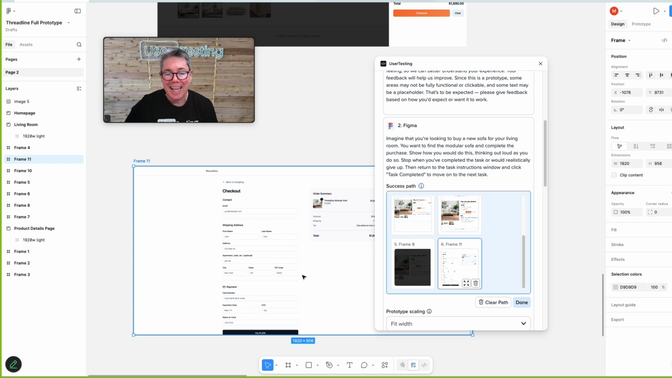
With the UserTesting for Figma plugin, designers can get fast feedback on prototypes in under a minute—without ever leaving Figma. Simply describe your prototype and task goals, and the plugin automatically generates a complete test plan, including instructions and follow-up questions. From there, teams can quickly gather feedback and see how real users interact with their designs.
"When test design takes less than 60 seconds instead of 60 minutes, teams can validate ideas earlier, test more often, and ship with greater confidence, leading to higher-quality experiences and better business outcomes,” said Jennifer Artabane, Vice President of Product at UserTesting.
Design, test, and learn—without context switching
The UserTesting for Figma plugin makes validation part of the design process, not a separate step. Key capabilities include:
- AI-generated test plans created directly from prototype descriptions and goals
- Visual success path tracking to understand completion rates, steps, and time across defined user journeys
- Figma-embedded results dashboards with success metrics, AI-identified themes, confidence ratings, and video clips
- Blended insights that combine qualitative feedback with quantitative data
- One-click access to transcripts, video clips, and deeper analysis in the UserTesting platform
The result? Faster decisions, stronger designs, and more confidence before anything ships.
See it in action [video]
The short video below shows just how easy it is to go from prototype to insight using the UserTesting for Figma plugin—no extra tools, no extra steps.
UserTesting for Figma builds on our recent User Interviews acquisition and will be generally available in Q2 2026. It’s another step toward making customer insight accessible at the exact moment decisions are made—right inside the tools teams already use.
On-Demand Webinar: How UXR Leaders Can Shape the Role of Research in the Age of AI
Explore how leading UX Research teams are evolving from a service model to becoming strategic insight leaders.