
Cathay | Tools Create Possibility. Design Creates Conviction.
Ernest Hui
Head of Design, Cathay Pacific
In 1839, photography made painters question their purpose. Design faces a similar moment now.
As new tools make it easier to generate and ship ideas, design matters more, not less. Because when anyone can generate ideas, human judgment determines what is worth creating—and design is how that judgment becomes trusted, believable change.
Cathay Pacific is rethinking the role of design in this new era. This session explores how design leaders can turn new capability into trusted change.
Speaker 1
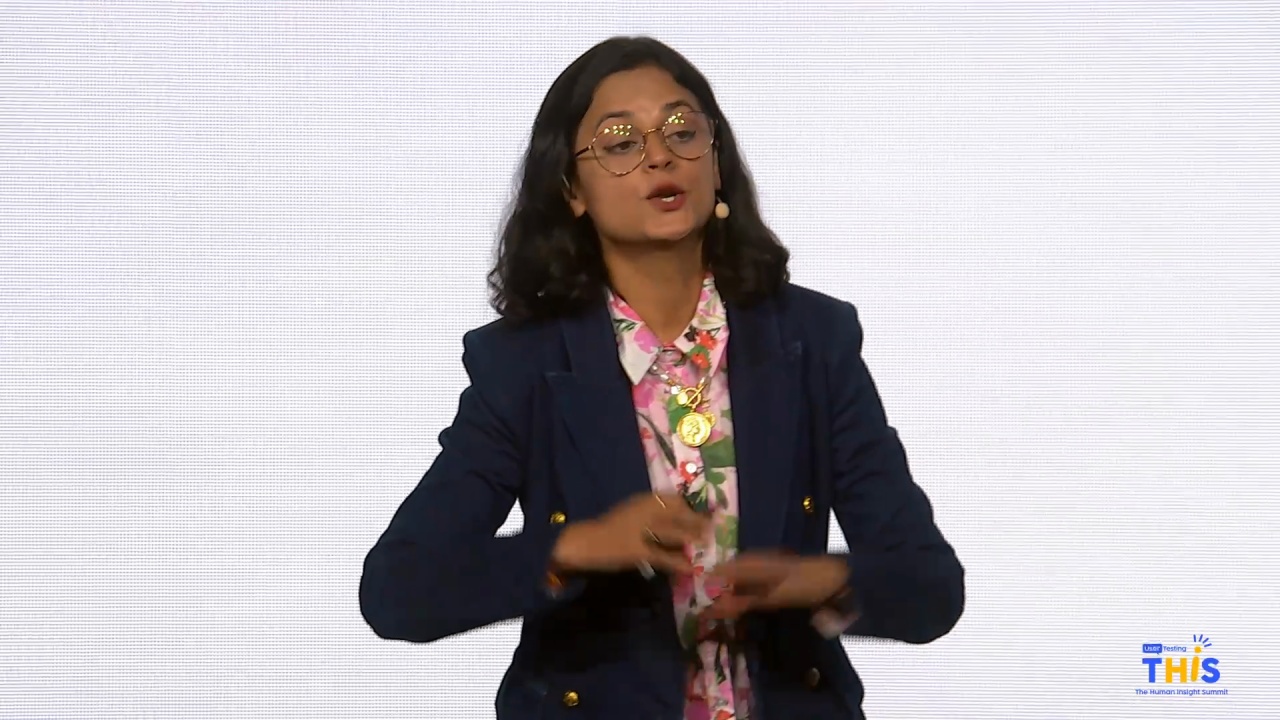
Okay, moving on. Another one of our Alumni Award winners and probably the one I've been fearing the most in terms of pronouncing the name of the company because I keep saying Cathay Specific. But we have Ernst Hu from Cathay Pacific who's going to tell us about the tools, create possibility and design creates conviction. Welcome stage artists.
Speaker 2
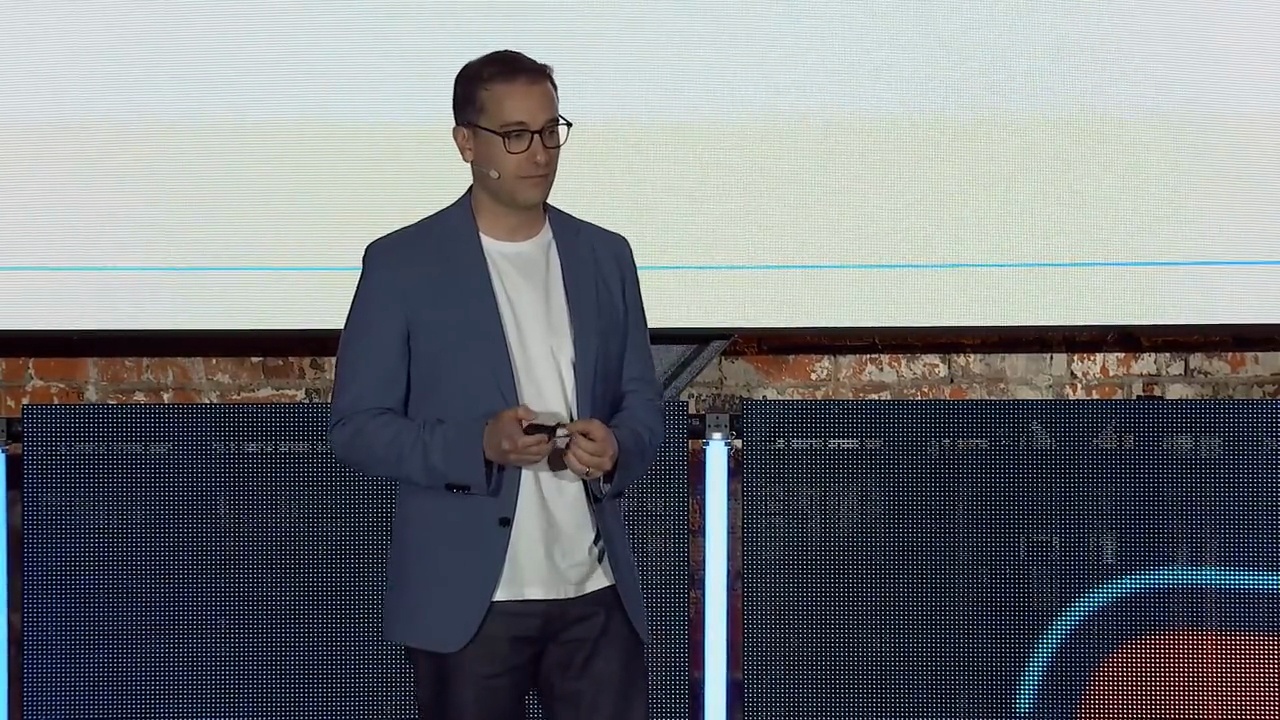
Hello, everyone. Thank you, and it's a pleasure to be here today. I'm happy to actually represent another part of the world, Asia, at this conference. And I have a story to tell. Similar to Bobby, I'm...
Speaker 1
Okay, moving on. Another one of our Alumni Award winners and probably the one I've been fearing the most in terms of pronouncing the name of the company because I keep saying Cathay Specific. But we have Ernst Hu from Cathay Pacific who's going to tell us about the tools, create possibility and design creates conviction. Welcome stage artists.
Speaker 2
Hello, everyone. Thank you, and it's a pleasure to be here today. I'm happy to actually represent another part of the world, Asia, at this conference. And I have a story to tell. Similar to Bobby, I'm gonna actually take you back the time of it. So I will begin.
So I will take you back to 1839. There was a new technology that arrived that changed everything. Not eventually, not gradually, but immediately and permanently. And I wanna tell you that story.
And then I wanna tell you why we're living it again right now.
So this is the Boulevard De Tompla in Paris. The year is 1838. It's 8AM in the morning.
The view is from the artist studio of Louis de Guerrero.
It's still and quiet, actually deceivingly so.
This man is believed to be having his shoes shined. Neither of them knew that they would be making history. They were just still long enough to be captured.
And this is actually considered to be the earliest photographs taken of a person.
Then one year later, 1839, the daguerreotype was made public, and it was the first publicly available photographic system, and the world changed.
The reaction from the art world was immediate and catastrophic.
Paul Delaroche, one of the most celebrated painters, publicly stood in front of photography demo and explained explained, from today, painting is dead.
Behind that declaration was a question that every painter was secretly asking themselves, every artist in fact. Will the machine make us obsolete? Can we survive this?
I feel that is echoing a lot current day with AI.
But they were all asking the wrong question.
Because photography didn't kill painting. It freed it.
Freed from obligation to record reality, artists could ask completely different questions.
What can only a human hand do?
What can only a human mind invent?
The impressions and expressions convinced Picasso.
Probably none of them could have ever existed without photography taking the burden of representation off the table.
And back to Delaroche. He actually continued to have a very successful career until his death. And he actually later became an optimist towards photography. He thought photography would become ultimately able to help painters in their craft.
So new tools don't actually replace us. They create possibility.
And now we're in 1839 again.
AI can generate almost anything.
It can draft. It can prototype. It can produce at scale no design team can even match.
And if your value is in producing pixels, copy, code, you're essentially that painter standing in front of that camera back in 1839.
For a long time, the craft was the credential. And if you could make it, it was automatically assumed you knew what to make.
AI removes that assumption.
So what becomes scarce?
Conviction.
Not craft, not speed, not output volume, but conviction.
The ability to know right what's right for the user, to defend it, and to move the organization in that direction is what becomes scarce when everything else becomes abundant.
And conviction isn't personal certainty.
It's the willingness to defend a position because you have the evidence to back it.
That's what research gives design.
And that's what gives the teams power. It gives this room power.
Cathay is an 80 year old helmet.
In Ireland, we built on one thing, trust.
Trust that will get you there. Trust that the experience will be consistent.
From the moment you book to the moment you land and beyond.
That legacy is also a burden, and we design within it. In addition to that, we are an airline. So we're very risk averse, safety first. And being very risk averse means that when you're trying to convince stakeholders to take risks, it becomes a much larger a much more difficult task.
This was once a real question asked to me.
It's not a cafe, so just to get that straight. But this is a real thing. And I actually don't blame them because design had given them no better language to use.
We were a black box.
Things came in, went in, and things came out. And whatever happened in between was invisible to pretty much everyone.
That black box existed at Cathay also.
And when you're in a black box or when you are a black box, people stop waiting for you to open. Decisions are already made when they arrive.
And not because people didn't value design, but because they didn't even see how it was how it works.
Design had become a dark art. Once you know how it works for us, it's easy to forget that others don't.
But design isn't magic. It's evidence, it's iteration, and it's judgment.
Once we started showing the thinking, not just the screens and trust started to follow.
So our team grew from five to 40, and that's not the story. The story is about the infrastructure that we created around it. A team of five answers briefs, a practice of 40 actually begins to set them.
That distinction, who owns the brief, is pretty much everything.
We have to build and instruct infrastructure that earns you the right to set the brief up. Research capability, design systems, designers embedded in the product teams. Not a centralized studio that people engage or comes to at the end, but all that pointed to the same thing. Design became a function that shapes decisions, not just rendered.
The foundation of all of this was research. Not research as decoration, not post rationalization of decisions already made, but research as evidence. We started measuring what we couldn't see before.
Where passengers were confused, where trust broke down in the booking flow, what the non frequent flyer actually experienced.
That gap between what was assumed and what they actually experienced was actually quite significant. When you put that evidence in front of leadership though, the conversation changes.
You stop talking about design as a preference and you start talking about business risks.
A language that resonates with most boardrooms around the world, most stakeholders around the world.
We'd always had testing, but narrow and shallow. One researcher so designers became that extension.
Getting into the field, running sessions, building empathy directly. And then the right tools arrived, user testing.
Not just the scale, but the depth started to change. Real discovery, validating what we didn't know we didn't know.
What always been a luxury, that level of breadth and depth became the baseline for everything that we did.
We now have three researchers supporting a digital experience team of a 120.
That ratio only works because the tools do the heavy lifting.
So tools create possibility.
We're the first to test that thesis within our company.
Better research changed our work, but something else changed how that work was perceived.
The team grew from 50 sorry, five to 40 because leadership saw research backed decisions what research backed decisions produced.
Wins came because we built evidence, but research was the mechanism.
So the two projects that you already heard about, I'll go into a little bit of detail.
Two completely different problems, but we used the same decision to attack them. We watched before we built.
Not analytics, not assumptions, actually people talking out loud, making choices in real time.
Cafe Holidays, a flight in hotels packages, one of the highest traffic surfaces that we have. And still, six out of 10 people dropped off before ever finishing a booking. The data told us told us that.
They couldn't tell us why.
So we watched. We watched people try to book a trip.
Out loud, on camera.
The option to change their flight had always existed. It just slipped on the next page, below the fold.
One person said it plainly. Where can I change my flight? There's no way to change it from here.
It wasn't missing feature. It was actually just an invisible.
So we moved it onto a page where people were already looking, made the price difference impossible to miss. Small changes, deliberately small. The smaller the fix, the more honest the insight has to be.
That led to 438 percent increase in bookings.
That's what conviction backed by research produces.
The membership dashboard.
The single highest page traffic page in the whole member experience.
Getting people to move up tiers isn't a nice to have. It's the whole point of the page.
The traffic was already there.
The upgrades weren't following.
Analytics couldn't tell us why people often visited. That could tell us why people often visited, but couldn't tell us why we left without doing it.
So we sat with real members, different tiers, different histories.
Everyone wanted to progress. Everyone as a member always wants to be able to build up their status, build up their their progression within the loyalty program. That was never the problem.
One member told us, I wanna know what I can get if I upgrade. Another said that they didn't wanna miss out on a good deal with earning status points.
So the ambition was already there. Dashboard just never answered.
So we made progress visible, showed what each milestone unlocked. Members still couldn't connect to what they what they saw to the connect what they saw to their own status So we went back again.
64 told us they couldn't tell what their current tier actually got them versus the old one.
So the redesign didn't actually add information. We actually started removing it down to the one thing that mattered most of them.
The next step and what is what it was worth.
That's actually the hard part and it was pretty easy to miss. The fix wasn't more detail. It was less. And we've actually been in debates with various stakeholders many times across and say, we should add this, we should add that. And in this instance, we were able to prove that we should actually be taking things out, not adding more because it's creating more burden and more cognitive load for the user, and they weren't able to actually make a decision.
That led to 220% increase in status upgrades, 57% increase in member revenue.
Each number is a decision that was intended with evidence.
Not a lucky outcome.
A convinced organization.
So this isn't a method. It's actually just pure conviction.
If you take one thing from today, it's watch before you build it.
We did it. And the first time, it cost us a redesign something.
That's also what changed for how an organization listed them.
Stakeholders started reaching out earlier and directly, not to review finished work, but to shape work that hadn't even started yet.
We had always had a seat at the table. And I think this is a consensus that I've heard from a lot of people that they've always had a seat at the table, but it was more of a courtesy than actually a necessity.
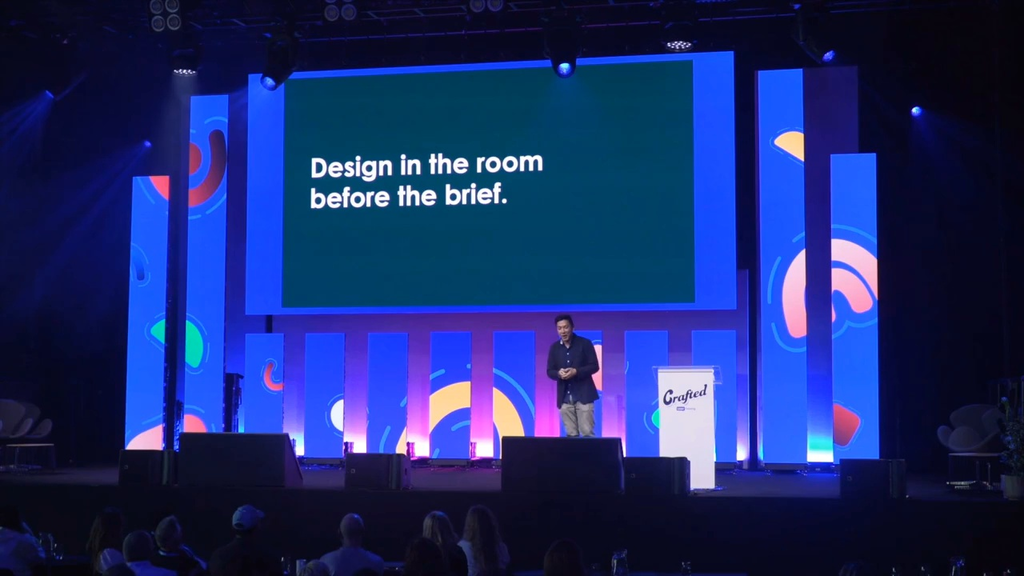
What changed after awards was the posture. People started coming to design before the break was written. And I know that this should shouldn't be the way it is, but and trophies shouldn't be what earns design teams internal standing. But in the region we're we're from, where design maturity is actually still young, external proof moves faster than actual internal advocacy.
A jury did in six months what two years of good work hadn't done on its own.
And that's an uncomfortable truth, but knowing that that's true for us is what's part of the job.
We weren't earning the permission to execute. It was the permission to influence.
So back to 1839.
Design entered sorry.
Design entered conversations below before solutions existed. Evidence changed postures of the room. One of our designers put it very simply, and this was probably more evident from the design team, is that going into a conversation with solid validation drastically changed the attentiveness of the stakeholders. They were all listening differently. They were all reacting differently. And that wasn't something that they were actually getting to before with the designers. And so research really elevated and changed the conversation.
Room listens differently when you have when you come with proof.
So we're back in 1839.
Everything we built at Cathay, a practice, the research, the evidence, the trust, was in so earned inside one version of the tool. We proved that design, good standing, and change how an organization makes decisions.
And now the tools are taking a leap again. But here's the difference between us and the painters in 1839. We know what this moment means.
We've lived it we've lived the first version.
And we know that tools do not replace the human. They clarify what the human is actually for.
And what we are for now more than ever is conviction.
The new tools don't just speed up what we already do.
They change the ceiling.
Before we came with research, qual, quant, and that changed the room. Now we can render complete end to end experiences from a designer's desk.
Not prototypes, not screenshots, fully interactable, testable experiences. Real contextual evidence to show how something actually feels to use.
The solid validation data changed the attentiveness of the room, and we know it did, imagine what happens when you walk in with a fully rendered featured working experience instead of a status prototype.
Design is entering into uncharted territory.
We can sidestep constraints that used to force us to ask stakeholders to imagine.
We can show them. We can prove it. We can iterate in real time.
Tools create possibility. It's designed that helps create the conviction.
And that conviction is the work.
We're not just standing on the verge of a shift.
We may be standing at the beginning of a renaissance. Photography didn't threaten painters, it freed them. Freed from the obligation to record, they could ask what can an only human hand do.
AI is doing the same thing to design.
Freed from the obligation to produce, we can ask, what can only human conviction create?
Impressionists didn't see photography as the end. They saw it as the opening of a door.
This is the door we're standing in front of right now.
Every time you brought Evans into a room that ran on opinion, every time you made invisible made the invisible visible, you were already doing them.
So we designers, researchers, everyone in this room will determine what that shift looks like. Not the tools, not by default, us.
What happens next will depend on what we have the conviction to create.
Thank you.
Speaker 3
Thank you very Jarvis.
Speaker 1
One question for you from me.
Speak to the audience right now. If they can do one thing tomorrow to change the way that they're working out, what would you recommend they should do?
Speaker 2
I think one thing that has been evident from my side of the design in Asia is that design research doesn't talk enough about their craft. And so I would start talking more, showcasing more about the day to day things that you do so more people within your organizations know what is happening in that black box. Because the longer that black box still exists, the risk is higher for us as a as a practice and as a profession because when you don't know about something, that's the least that you care about. Making it known is how you start getting people to care about the impact that we can make.
Speaker 1
Thanks so much. I think that's so cool. Thanks so much for your time. Thanks for your question.
That's something for you guys to do when you go back to your teams tomorrow. Start talking about what you're doing. Start start from the rooftops about it. Start talking about the impact of what you've had and the impact that you can have going forward as well.
Now, we're gonna have an all short break. We're gonna have the panel on stage at 03:45. So there's some refreshments, we're all upstairs in the bar at the back. Grab something to quickly eat and stuff and pop yourselves back down and we'll get going as quickly as we can.
Breath of home stretch now guys. So we'll see you back in a bit.