
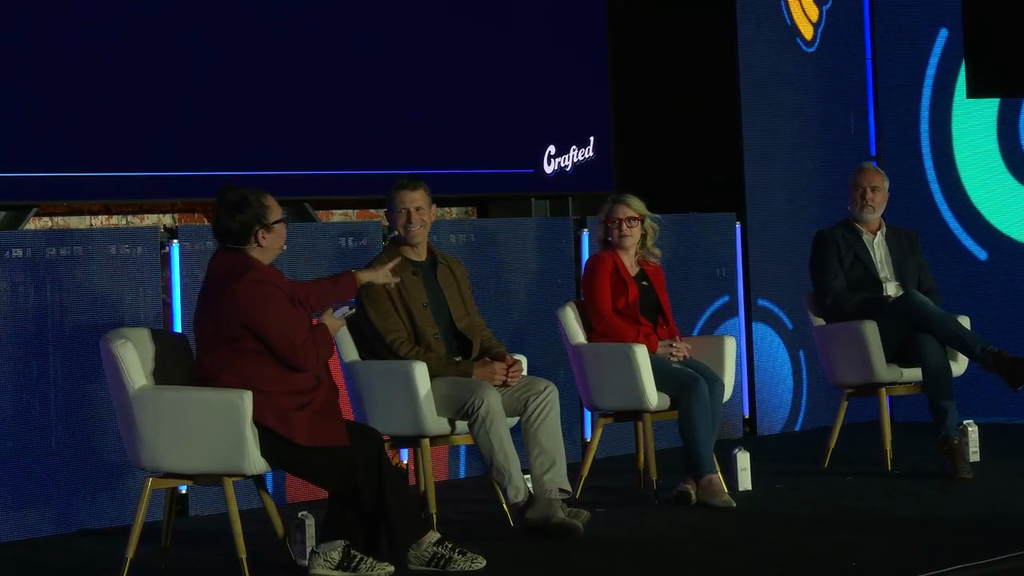
Exec Panel | AI and the Future of Work: How Leaders Are Rewiring Teams and Decisions
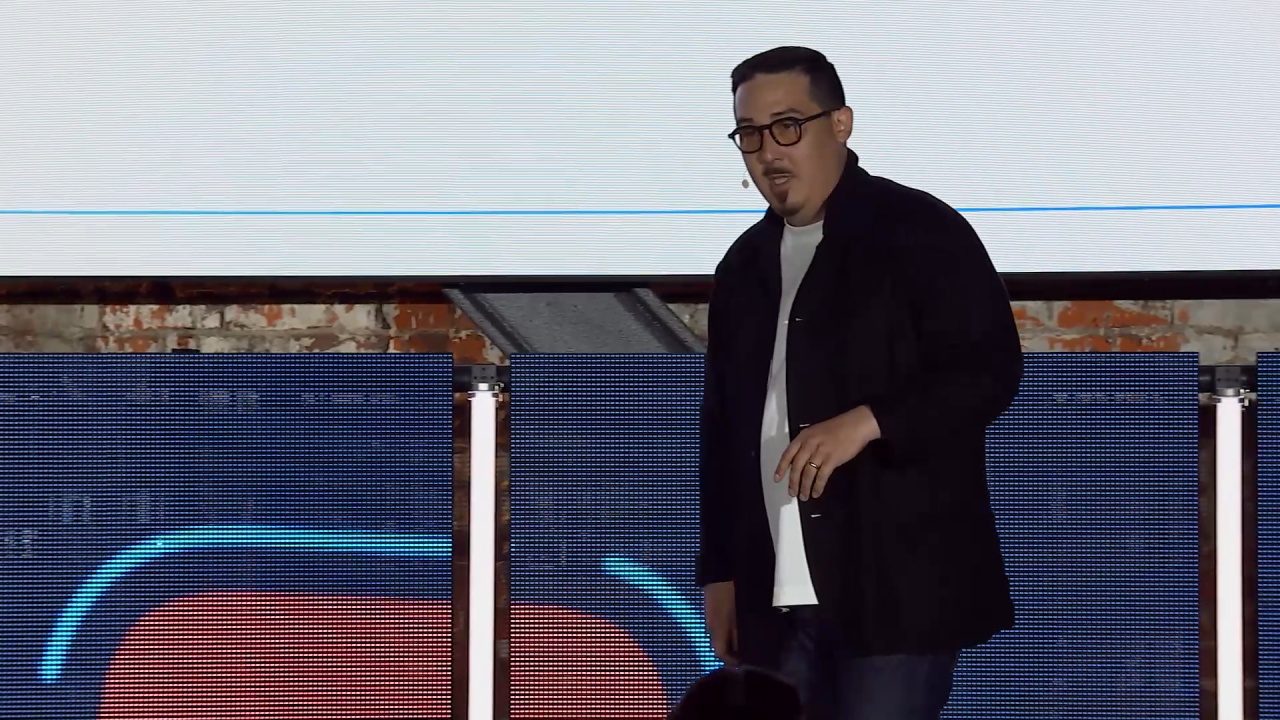
Eliel Johnson
AI Design Leader, Former VP of Design at CVS Health
Jason Giles
Vice President, Product Design, UserTesting
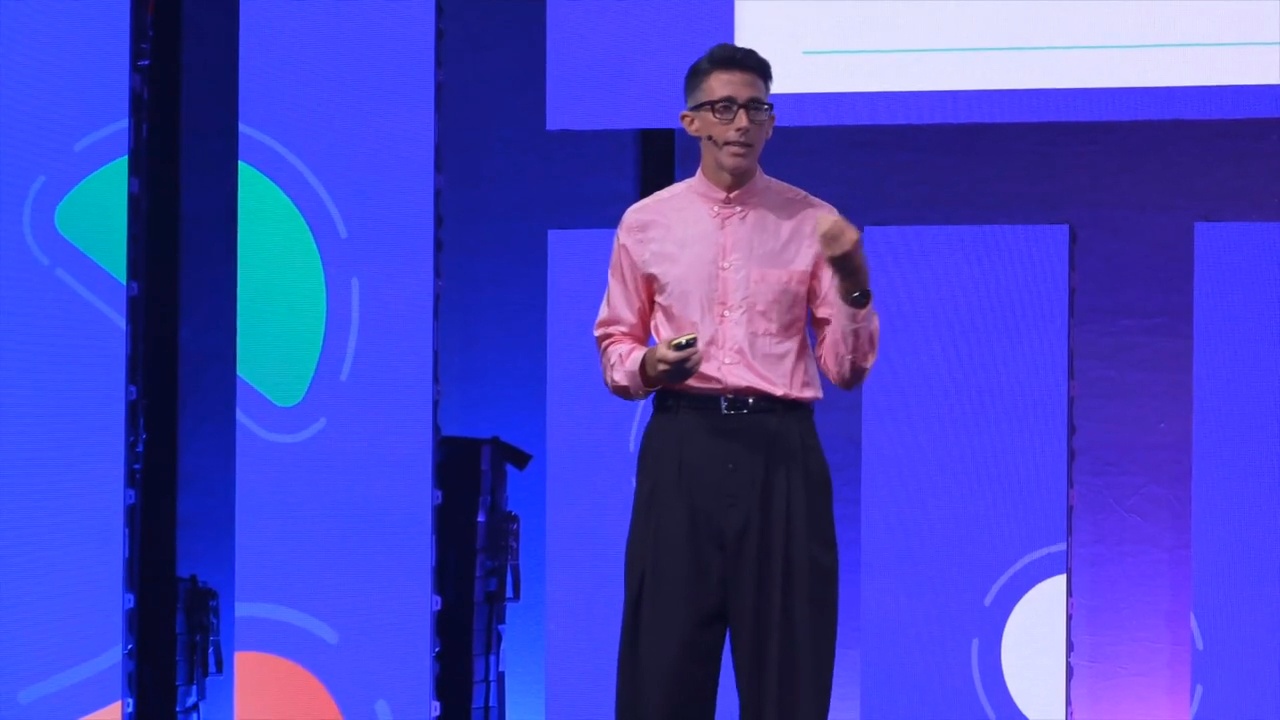
Jessa Parette
Head of Design, Byte by Yum!
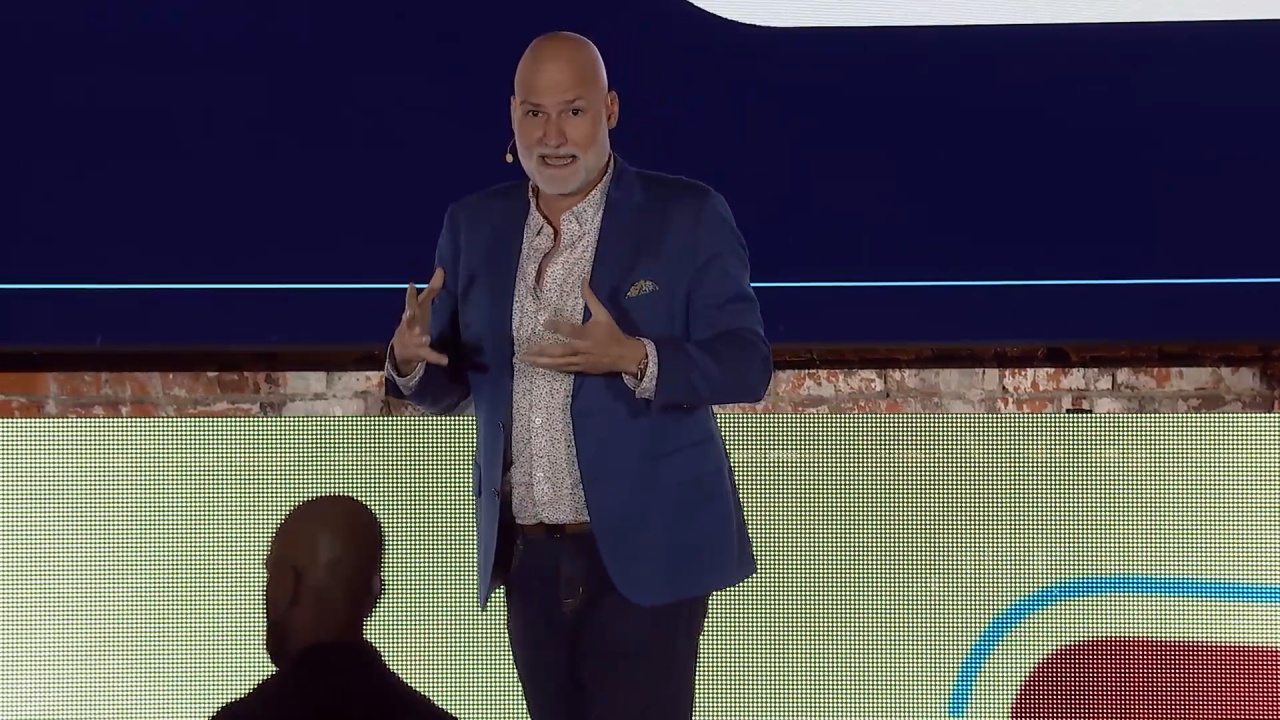
Liz Miller
VP and Principal Analyst, Constellation Research
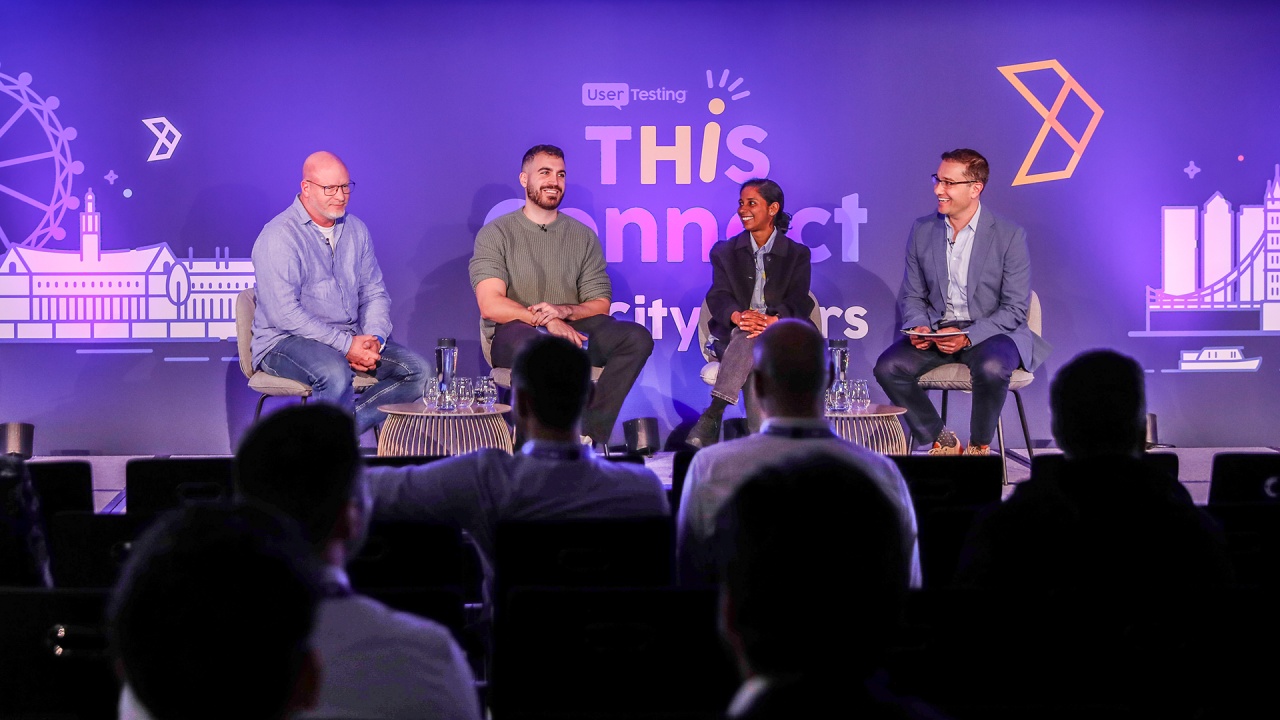
The panel will be moderated by Liz Miller, VP & Principal Analyst at Constellation Research, and will bring together cross-functional leaders to explore:
How AI is reshaping workflows and decision-making
How teams move faster without increasing delivery risk
Where research lives as AI becomes more embedded
What “good” looks like when insight informs decisions at scale
Speaker 1
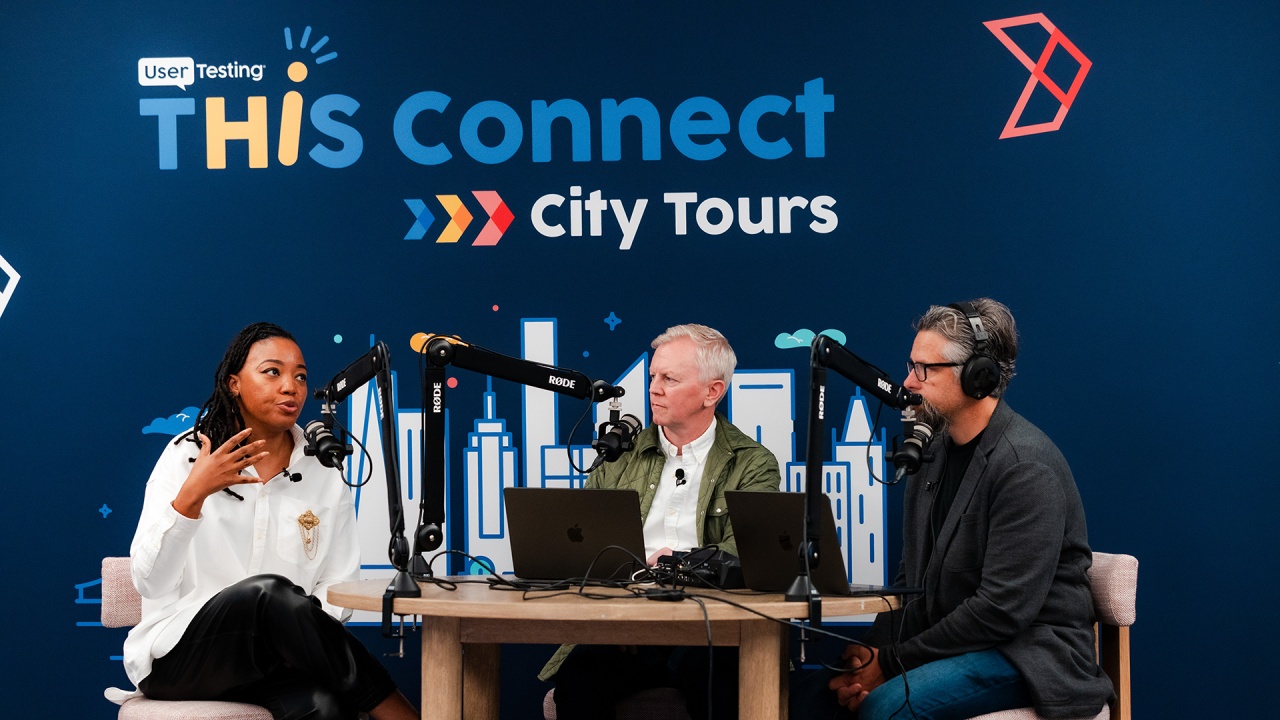
And here's the thing, we're gonna have three amazing panelists come up here. I get to interrogate them and here's the deal guys. This is my this is where the price gets paid. This is where the cost of standing up here all afternoon and torturing you guys with personal stories comes to place because I get to ask them the first questions.
Neener, neer. But if you guys have any questions, if you guys have any questions, very specifically, just these tables, not you. Just you guys. Like just throw something up.
I will ask them the...
Speaker 1
And here's the thing, we're gonna have three amazing panelists come up here. I get to interrogate them and here's the deal guys. This is my this is where the price gets paid. This is where the cost of standing up here all afternoon and torturing you guys with personal stories comes to place because I get to ask them the first questions.
Neener, neer. But if you guys have any questions, if you guys have any questions, very specifically, just these tables, not you. Just you guys. Like just throw something up.
I will ask them the question. Are we all good? You look very skeptical of me right in this very moment. I think everybody knows.
But you know I will do that right? Okay.
Did you get any of the salami and the vegetables back there? There's cheese. You're good? I feel like you need a snack.
Speaker 2
I feel like I need a drink.
Speaker 1
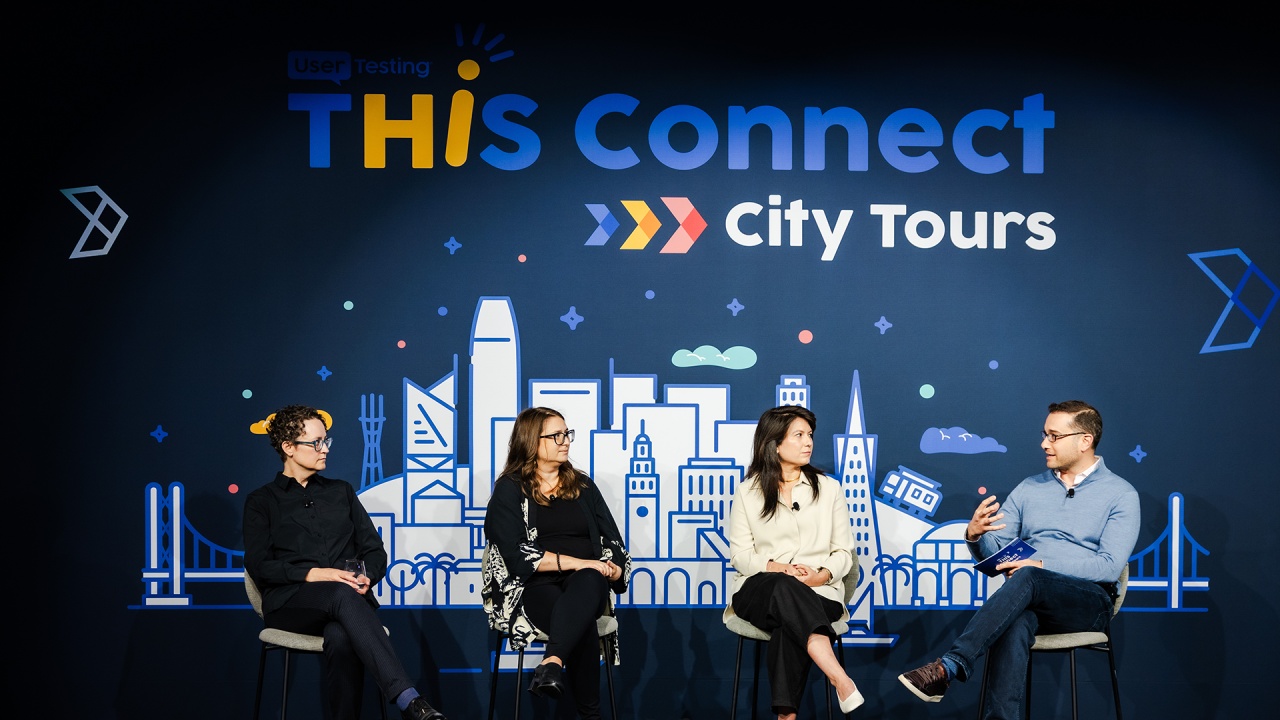
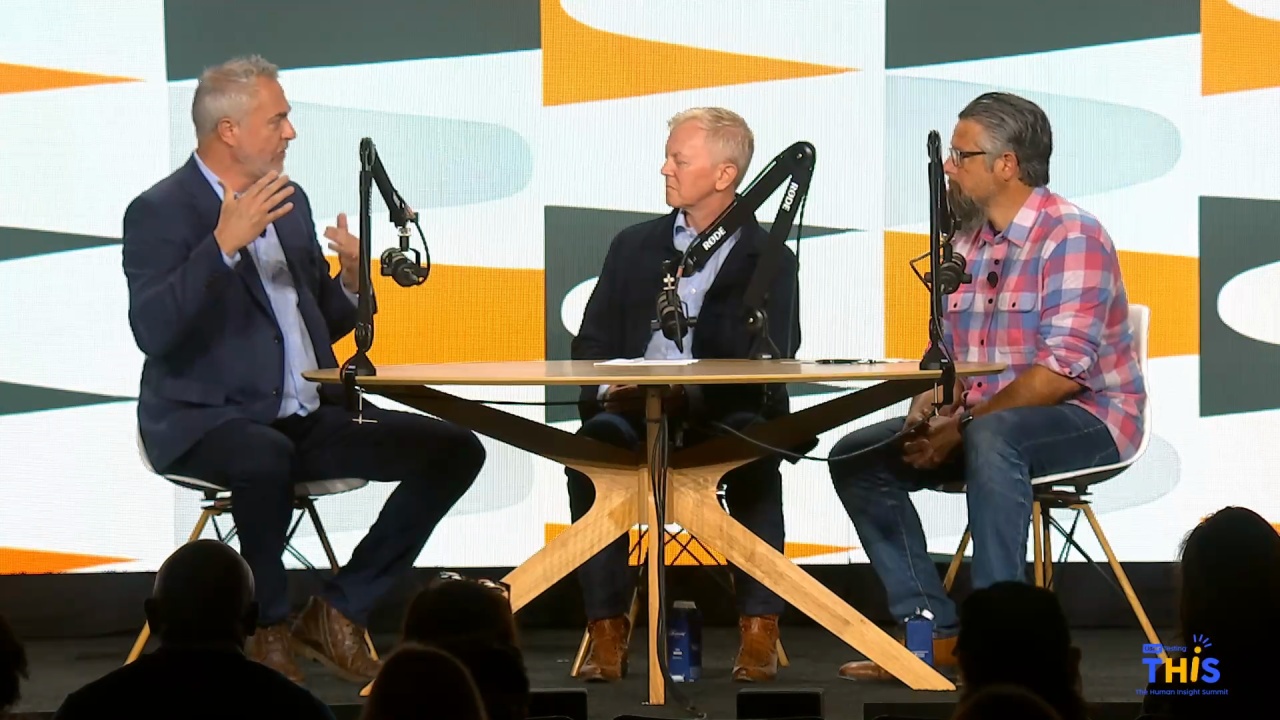
Oh oh brother needs a drink so if anyone's by the bar and wants to bring my man up here a drink but let's get this wonderful panel up here. Okay guys, come on out. We've got Elal, we've got Jason, we got Jessa. Come on.
He's trying to race us to the bar so get up here.
Can I have a round for this great group? We had a chance to meet before. They still got the music. Thank you to the team in back.
I gotta tell you this tech team has been so patient with me because I'm like, here let me go three minutes before any of you wanna do anything. And then I go change things and I take my mic off. Hi guys. Hi.
Hey. In our prep call, I threatened the user testing team that we had so much fun on the call that we were just going to do this.
And talk to each other. And all of production was just like, she just moved it off of the white things. Okay. We're back. We're back.
Here's what we're gonna do. I'm not gonna read your bios. I don't need to do that. These people don't need to hear that type of dramatic reading.
But here's what I would love for you to do. I would love for each of you to introduce yourself and then answer. It's gonna, it's like a game. Okay.
A game show. Okay? You're going to fill in the missing word here. So you're going to tell us a little like the who you are, the what you do, the who you do it for, did it for, you know the And then you're going to say AI is reshaping decision making by becoming k.
You have to go first, Alal. Fantastic. Good luck with that one, buddy.
Speaker 3
Yeah. Well, hi. Nice to be here. Thank you very much. Thanks to the user zoo user testing crew. My name's Eliel Johnson. I started my career twenty five years ago in design.
I've led
Speaker 1
When he was three.
Thank you.
Speaker 3
I was with Charles Schwab for twelve and a half years, and then most recently with CVS Healthcare as the VP of Design.
I'm now leaning in **** ** AI technology and have been building my own apps and having a lot of fun. So I think I qualify as the AI pill builder here.
Speaker 1
Like it.
I think
Speaker 3
I would say AI is a superpower for people who want to actually make and build.
Speaker 1
Oh, okay. I like that one. Jessa, what do you got? What what you next.
Speaker 4
Oh, okay. Thank you. Well, name is Jessa Parrott. Thank you so much for for having us. I'm head of design for Yum. I lead Byte by Yum. It's our proprietary AI platform driving four global brands.
So very fun. It does mean that my job is to make design matter in an organization that's moving very fast at a very big global scale.
Previous to that, I've worked at Capital One as head of design for in multiple positions, and then Walmart, and I had a startup, and it's fun. So to answer your question, AI is changing decision making?
Speaker 1
AI is reshaping decision making by becoming Oh, Lord.
Speaker 4
AI is reshaping decision making by becoming the great equalizer and becoming the thing that makes ******** impossible.
Speaker 1
I've just got to tell all of
Speaker 3
you I thought Jason was going be the
Speaker 1
one that dropped the first naughty woman.
Speaker 4
I was told we could say this.
Speaker 1
But Jess, I am so proud of you. I am, yes.
I was
Speaker 4
told it was okay.
Speaker 1
Yes.
Don't look at that table of executives over there that just got instantly worried about risk and compliance. But go ahead.
I'm done. That was my safe. Okay that was it. Okay. But wait, Yum brands equals?
Speaker 4
So Yum brands, we have four global brands. You might have heard of some of them. KFC, Taco Bell, Pizza Hut, Habit Burger. We are in fifty five thousand restaurants in over a hundred countries. And our platform manages over three hundred million digital transactions a year. So that's that's the scope of my role.
Speaker 1
Yeah. AI that. There we go. Jason. Hi.
Speaker 2
Hello. I'm Jason Giles.
I built the design and research practice at UserTesting. Previous to that, I was at Ticketmaster, DIRECTV, spent a lot of years at Microsoft. Now I spend a lot of my time talking to a lot of different customers, really understanding how all this change is impacting them, and then driving that understanding back into the product team. So, and then you need to have like the it written out.
But basically, I think AI is really changing decision making in the sense of there's just the speed of all the decisions that have to be made. Yeah. Right? We're being asked to be able to make calls faster than we ever had before, and that really has changed the dynamic.
Speaker 1
Love it. Okay, Jason, I'm gonna stick with you for a minute. Just gonna come down this way. See how I did that?
I went that way, and then I'm gonna come this way. Okay. There's a method to my madness. Jason?
Speaker 2
Yes.
Speaker 1
A friend once told me that and he articulated it this way as an equation that OP plus NT equals FOP which stood for old process plus new technology equaled faster old process. Right?
So give me some thoughts. Give me some thoughts here on design. This is, I feel like I just unleashed him. Did everyone notice that moment where he went from like this is what I've designed and I'm super official here at user And now I'm like here Jason.
Please tell me about what happens. What's the risk that we need to really talk about now when it starts to come about AI and decisions? What are we at risk at if we're just going to throw AI at some old stuff?
Speaker 2
I mean, I think one of the big risks is that there's I think we talked about multiple times is that there's so much that we can do now. There's so much that we can release to customers that we can, provide for our companies. But the question of like, should we? And is it the right thing that is actually going to manifest a better experience? Like, as designers, as researchers, we got into this to improve the human experience.
Speaker 1
And
Speaker 2
I think it becomes really difficult sometimes because we're moving so quickly.
Sometimes we're not able to make the pause to ensure that what we're doing is actually moving the needle forward. And so that's my big fear. That's my big challenge, I think that's the big crisis that some of our teams are in right now.
Speaker 1
Yeah. Jessa, when we talked before and the four of us got to kind of chat and get to know each other a little bit, you had like a mic drop moment for Yeah, you did.
You
Speaker 4
did.
Okay.
Speaker 1
I wrote it down. Okay ready? Oh no. I know. Like drum roll please. People with tables, I I specifically need a drum roll from you. Oh.
What do you mean you didn't know how? There we go. Okay. Thank you. Good design ask the question.
Good research forms the question. Yep. I believe Okay. I want you to expand on that because I want I think we're at the stage of this conversation where if good if good design asks the question, what are we asking when confronted with garbage and ********?
Speaker 4
So I think just building off of what you've said is that the rate of decision and compression has absolutely skyrocketed. Okay? And so the teams that I see that are truly moving quickly and well aren't the ones who have just been able to execute faster. They are the teams that are able to pinpoint where humans need to stay in the decision process.
They are the ones who have said, here is the line in the sand where we will not abdicate our right to decision. Here is the line where we will slow down. Here is the line where design finally is not about just UI, but it is about how something works. Those are the teams that I have seen work.
That is what asking a good question means. And for research, research has never been more important than right now. Okay? Because here's the thing about all of our data.
AI cannot give you an input signal that is more important than you standing in a restaurant watching your operator grab a sticky note and then tell you the workaround that they've been doing for eight months.
Okay?
AI is only the model, but it cannot synthesize that human element. That is the stage gate that keeps it from BS.
You see I now I'm Oh,
Speaker 1
now she sanitized it.
Gosh. Fine.
Speaker 4
But that but that is the criteria.
Speaker 1
Yeah.
Speaker 4
Okay? Because designers who are doing it well are the ones who understand where human judgment needs to be and how that doesn't necessarily slow down process, but how that asks a better question. Yes. Should we be doing this?
Should we be outsourcing this? The ones that I have seen that have done the best are designers and teams who have decided intentionally not to outsource their execution and their right to decision. Okay? You can outsource execution.
AI just did that.
Speaker 1
Yeah. Don't you dare outsource your right to decision. Love that. Absolutely. Absolutely. LL okay I'm coming to you.
Because I, because and I it's like I feel like this was the natural progression because I feel like you, we were talking about Venn diagrams. Right? And that you sit and you really see yourself of has, your career has really been about like product, design, that research and then there's like the ll space that's like right in the middle like that cross section. Right?
And now you're applying AI to it. And I think exactly what you said of, I think there are a lot of folks out there that worry that they are not going to be allowed to make the decision of whether they give something up or whether like AI is going to come into like it's going to open the pod bay doors and it's going to kill me and oh my god.
There's that worry which we're saying stop. Don't worry about that. Don't give up the decision. But you also very firmly believe that there is an opportunity here to embrace not only our role in that center of where all of those intersecting circles lie but how we apply AI and that it's something very intentional for you.
Tell us about that. Dive into that more.
Speaker 3
I've had a little like a lot of really good conversations here over the last couple days with other leaders who are leaning into the tooling. And I think a lot of people are finding their energy, their early hacker days, they're sort of rediscovering that passion for making.
Speaker 1
Yep.
Speaker 3
And these tools take a lot of the drudgery. I've talked to people who founded companies who had stopped coding or now coding again, people who are executives who have leaned back in. And I think the composition of a team is going to look different. Potentially, I used to lead teams as large as five fifty, four hundred people.
I think now I can produce work, cover a similar design surface with a fraction of that because the agents give us superpowers. And so if I think about where the power is, it's not in the volume of work that's coming out, but it's kind of taking some of the mundane things out and accelerating them. And then also allowing us to work with higher fidelity, outputs to get better signals earlier, but we still need to evaluate them. And we need these humans.
And what I heard today is incredibly exciting about the ability to bring in, whether it's MCP or other ways to bring in the insights into this velocity focused culture right now. Because I think the first part was really about how look how quickly we can the cost of engineering is going to zero. So the velocity is going along. But what about the insights?
So we're on the right track here today, super excited about what team here is building. But also as individuals, our capacity to do more with small teams. Yeah. In in eight eight days, I was able to build a fully functional surf forecasting app that, would have taken me months to do with engineering support.
But I was able to just really go through the whole process end to end, write a really good PRD because I know the domain really well. It was for me and my kids to use. So I'm the user. I have the user insights.
But that capacity means there's going to be a lot of people out there building really exciting things now for themselves and then for small audiences. Yeah.
Speaker 1
Super exciting. So does everyone in this room now understand that there's an app to help you jump high and there's an app to predict surf? We we got that. Yeah. I hope that's the important takeaway that we're all walking away from this with. Jump high, surf better.
Speaker 3
I mean I've I've been having conversations. It's a fun time. People are sharing what they're building with each Great.
Speaker 1
Absolutely. Because it becomes something that we're all able to do. Yeah. And everyone feels like they've got a part in it. But Jason it's interesting because what something you said on our call sparks this. Is that you were concerned that design might be coming to the table too late.
Speaker 2
Yeah.
I mean, there's
Speaker 1
a
Speaker 2
lot of narrative out there right now.
And a lot of loud voices around, oh, here's what's going to happen. And I honestly don't hear a lot of voices from the design, the research community, as much as I would love that there should be. And this narrative is around, here's how it's going to work.
It feels like fear mongering, to be honest. And so a lot of the conversations, especially I've had with some of you now, I'm actually starting to get really inspired. This guy Brad, I just listened to Hibbs talk. And that passion of realizing like, no, this is like what is the opportunity for the impact that we still have for our companies.
And I mean, I'm telling you, the time is now. Like if there was ever we've been asking as researchers, as designers, for the seat at this table for an opportunity to make some real impact into our companies. And I'm telling you, it is happening right now. There is so much change happening.
And when change happens, those are the tectonic plates are changing. And if you want to step into that, we really have this opportunity. And the worst thing that I can imagine, due to some of the fear mongering, is for people to shrink back.
Speaker 1
Yeah.
Speaker 2
To be overwhelmed, ah, I should think about a different job. Maybe my whole career, you know, I need to think about something different, and it breaks my heart. Yeah. Because this is the time of like, no, no, no, no, This is our moment. Yeah. We just need to step into it.
Speaker 4
Can I just add to that real quick? Yes. For thirty years we've been crying. We want a seat at the table. Like did you know there was a table apparently? Know.
Speaker 1
Oh I'm in marketing
Speaker 4
complaining about this misconceptional But like even time
Speaker 1
for thirty years we need
Speaker 4
a seat at the table and then show up with empathy maps.
Okay.
Now AI goes, what do you do with that? Right. I'm not saying empathy maps aren't great but I am saying that the bar just raised in terms of the quality of decision that we have to be able to hold increasing circumstances of uncertainty. That's the bar.
Right? So you know what? You can look at it and say, hey, guess what? We've been crying about this for thirty years.
It's not that the seat is not there. It's that the seat has to be reclaimed now. We have to now show them what design really is because for thirty years you've saying, design isn't how something looks. It's how something works.
Okay. Prove it. How does it work? How does your data schema work?
How does your information architecture work with your taxonomy? How does it work when you have data that's thirty years old and primarily from one area and not really great and you're building a model off of it? How does it work? And the thing is you can either look at the AI automation and go oh my god thirty percent of my job just got automated.
Right? I have designers who are scared because for so long the lowest value things in an industry will always be the first things that get automated. In accounting, in nurse, name the industry, the lowest value thing is what we automated first. The lowest value aspect was always like just throw away prototypes sometimes, right?
But it took so much of our time. I'm not saying interaction design is not hard. It is. It is very hard.
But what I'm saying is you can either look at that and go, oh my god, thirty percent, forty percent of my job just got automated. Or you can go, oh holy crap. I just got forty percent of my time back.
What am I going to do to be a better designer? Surf Surf app.
I'm going to do one that teaches you how to jump while surfing. Right. Alright. I'm just going take it to the next level.
That's me. But that's the mindset you have to take is not like, my god, how do I avoid it? It's here. Now is the moment.
Okay? Your mindset and how you understand our craft at a deeper level just needed to get higher as well.
And that's the challenge ahead of
Speaker 1
us.
I love And
Speaker 2
Brad gave a great point there too, right? Like
Speaker 1
Like if
Speaker 2
you think your job is generating reports Good Lord.
Your days are over.
Speaker 4
Your days are
Speaker 2
done.
If you think your job is to generate screens and prototypes, I am sorry. But that was never what a designer was intended to do.
Speaker 1
I'm gonna throw it back to Travis. One of the slides that he had. Right? Which was, you know what?
Just because AI could come up with the output didn't need it had anything to do with the business outcome. Yeah. Right. So when it comes to this generation, the inquisitive, the curious, the builders, the doers that are sitting here today in Crafted.
What would your advice be to them of how to actually it's not about and I agree with you. It's not about getting a seat at the table. It's not even about finding a table. It's about like flipping the table at this point. Like how do we become table flippers that go in with the business outcomes, that go in with the answers, and that go in with the fuel that help accelerate decision velocity? Because anyone can make a decision. The problem is can we make the right decision quickly.
Speaker 3
Well, one I mean, Travis was really thoughtful about sharing what's working and not working in his world. And I thought that was powerfully authentic and great.
I think the rate of change, I've heard, you know, anecdotally from friends and colleagues, it's different in every company.
Speaker 1
So Fair. Yeah.
Speaker 3
Culturally, it's there isn't a monolithic take on it, and there's people on a different point in the curve. But what I've heard universally is that the person that gets passionate about something, whether it's a surf app on the side or something they lean into and really immerse themselves in the tools, then they get sort of the understanding of the power. And in companies where the executives are sort of mandating it from the top seventeen point five percent more AI is not going to produce the outcomes, and it's going produce a lot of token spend. But if you get people who understand where the value is going to be, they can help shape how to adopt those tools to transform their jobs. They are less anxious because they're not thinking about this thing they've heard abstractly, but they're actually using it and seeing where it's good and not good and where it's powerful and not powerful. They can help shape that.
And then there's a whole big organizational challenge with coherence. So if you have a lot of one man bands doing their own thing, that could be incoherent. And Travis talked about that need to shape that.
But I do think there's a need for people just truly to immerse themselves in it and then get energized about what's possible. Because when they can see what's possible, they'll find the opportunities. It's a combination of vision from above and ground up innovation and people sharing. And so some of the tricks teams are using is skills library.
So literally sharing things to create coherence. Because context is everything with AI. Because if you just go into a blank slate, and you're going to get this random stuff back, It does average really well. It doesn't do excellent well.
But if you can shape it through context as an organization, that can have a real, I think, a real unifying, whether it's your own design system codified, whether it's business rules or even rules around data, that can really help people work together. And then sharing those things internally are really powerful.
Speaker 1
Terrific. Yeah. Love that. Do you have a question yet?
Are you sure? I'm very concerned about this table now. You had a trouble with the drum roll. Do you have a question?
You're not? You have nothing? Okay I'm going to keep going. Fine. Forget about YouTube. We're going move to a different table.
I'm giving up on these guys. Okay. Teams.
I think teams start to look different. But maybe not as radically different as a lot of people think. I think when people hear you're going to have AI coworkers.
You're going to have like oh my god. Like when once we get past the it's coming for my job. I think we start to imagine a world in which we really start to rely on AI as more than just a tool or a platform. It's not a thing anymore.
It's something that we are going to, that we are pulling in. It's skills that we're sharing. It's something that we can actually go and to that annoying marketing manager that always asks the same question every single You can give that person a skill now. Right?
Like it's there are things that we can do. Talk to me about not just what the team of tomorrow, like literally tomorrow, is going to start to look like but how are you empowering each of those new teams to actually go out and create their own network and their own group where they are pulling in different people. Maybe from different parts of the organization. What do we start to look like?
Because I go back to Brad's like the where it was like the thing and then the spokes and it looked like an octopus with information.
We've all got to build that right in our organization. So how do we start to do that? What do our teams start to look like and where can we start that transformation if we aren't there today? Jess gonna start with you.
Speaker 4
Oh good. I got the hard question. Yay. Yes.
Speaker 2
It's a little softball.
Speaker 1
But wait just for just on the record, the reason why you got the hard question is because he didn't have question for you.
Speaker 4
Alright. Thank you.
Speaker 1
Okay. Just so we're all clear. Go ahead. Go ahead.
Speaker 4
It's fine. Your question is like what do the teams look like? How do you empower it? Right?
Speaker 1
Yeah. And and where do we start?
Speaker 4
Oh god. Okay. So I think as a design leader, where you start really depends on the company you are in, the maturity state of your design organization. It depends on a lot of factors. So I don't want to be just I don't want to dissolve everything into a simple statement. I think you need to start with understanding where you are.
That's where am I in terms of literacy and coherence, in terms of acceptance and adoption. Like start there because in terms of like practical skill sets, there's a myriad of ways you can do it. But you can't know where to go unless you know where you are. A map is useless if you don't have a starting point. So what's your starting point? But just to get to the heart of it, I think the teams of tomorrow are going to look radically different because I think the job of design has just not elevated, but we've ripped away.
We have ripped away something that used to get in our way, and I think designers don't realize you are now decision makers. You are policy crafters. Right? Every UI decision, every disclosure, every way of doing trust or not doing trust, that's a decision.
That's governance. Because policymakers will always lag behind technology, and when policymakers lag, design fills the vacuum either intentionally or unintentionally. So my question is, how are you setting up your teams to be intentionally stepping into the gap? How do you because listen, silence is a decision.
Silence is a very loud decision. So if you are sitting there quiet and they're going, we should use this AI model or how do we do X? And you realize, oh my god, we're gonna that's not great for people who are non native speakers. Right.
Your job is no longer to come up with a prototype to show options. Your job is to stand up and say, hey, the decision we need to make right now is really around trust, and it's really around reducing ambiguity. So the teams that are going to emerge where I see is I think there are four skill sets that design leaders and design teams need to be ready crafting into their teams. One is ambiguity tolerance.
Ambiguity tolerance. Right? Don't wait for the answer. Help craft the answer because you don't want to wait for someone else to craft the answer of AI. I promise you. You don't want to.
Speaker 1
Alright. That can be a tough place to be.
Mean LOL
Speaker 4
is very tough place
Speaker 1
to Let's put it this way.
CVS Health, this is probably an organization that has like multiple Debbie's and Bob down in risk and compliance. Yeah. That they're actually super cool with everything being ambiguous because then no one's gonna talk about it.
Speaker 4
Yeah. Exactly.
So how did
Speaker 3
you So like let's say with point one here real quick.
How would you get people comfortable with ambiguity? Well, mean, think there's there's legal risk and compliance in any organization. And in any highly regulated industry, there's a real need for governance. That's a real thing.
And so like, as you said, every company is in a different place. So what's possible at a small start up in San Francisco is going to be different than a Fortune four company. And they're going to move at a different velocity for good reasons. I think you can't talk about it as this is the way everyone should operate.
I think from a mindset perspective, it's empowering people to try things. It's setting up a culture of experimentation. And this morning, we had a great session. Eli Woolery and Bobby Hughes were talking about design thinking and AI.
And a lot of the things I think people think about for design thinking, like prototyping, the phrase a prototype's worth a thousand meetings. You know, you can shape strategy Yeah. Through design By showing rather than telling. I've seen that really, you know, clarify decisions in a way that slide decks don't.
Yeah.
And you can look at a lot of left brain stuff, but when you feel something, it can really really help Is
Speaker 1
that probably the best way to make people feel comfortable?
Because I'll ask you all because if we're talking about like let's be comfortable with the ambiguity, giving them something that's solid. Yeah.
Speaker 4
No. I'm I'm even going beyond. I'm going beyond that. When I say ambiguity tolerance, I'm not talking about in the business.
I'm talking about designers who used to think like let's do this. You get a brief that says from Debbie or Bob this Either of them. Either one of them. Pain and lack In the organization, they're like, the edict comes down.
Increased AI trust by seventeen percent. But no one has defined what trust means.
You can't wait. You don't wait for someone to define it. You have to step in as the designer and go, we need to define trust together. That's what ambiguity tolerance means. It means that you are no longer allowed to be silent. You have to craft the tolerance. Cannot sit there and be like I don't have the answers so I can't do a prototype.
Speaker 1
Jason likes to be silent. He's not, he's a shy wallflower.
So we do to call on him because he does not have
Speaker 2
an The opinion piece that really resonates for me is that the opportunity for design and research specifically is in that field of ambiguity, it's to drive clarity.
Speaker 4
Exactly. Right.
Speaker 2
Like this is when we talk about stepping into the new opportunity, it's how do we provide clarity for the teams that we're working in.
Speaker 4
The designers who will provide the best value, the ones that I will always hire that cannot be automated, the designers of the most value are the ones who can reduce uncertainty. And you know what it takes to reduce uncertainty? Judgment.
Speaker 1
Yeah.
Speaker 4
Design judgment. That's what it takes.
Speaker 2
And the timing of this is so important because right now, whether you're your stakeholders, whether they're product people or whoever it is, they're having decisions so quickly. It's like driving down a road at a hundred miles an hour, and all of these exits, and it's rainy out, and they have to make decisions. Yeah. And if you can position yourself as a strategic guide, somebody that can help in that decision making, actually here's where we should think about narrowing the options. Here's where it might make sense to slow down a little bit. Yeah. Because this is a hard corner.
That mindset shift is so critical right now.
Speaker 1
Oh yeah.
Speaker 2
And if you just want to sit back and be like, well I don't really know what the answer is. It is, I can only describe it in a physical orientation. This is not a time to be sitting back.
Speaker 4
It is not a time to outsource.
Speaker 1
I also think it's interesting because I think when you're talking about, so there's a data point that's floating out there right now. It's like sixty four percent of chief marketing officers have said that their biggest challenge they face right now is that they have missed opportunities in the market because they couldn't make decisions fast enough. Yeah. Right.
And so they've been driving down the street. They think they're going the right way but I think a lot of times we think about AI as being like the sat nav or design is gonna be the sat nav that like tells us where to go because we've brought this prototype to you. And it's more like the sat nav when you missed the exit. Yeah.
Like you missed the exit and it's the thing that says recalculating. Where it's going like this is how we could have actually gotten you there better. You need to listen to it a little bit more. But I think people want that clarity but what you're saying is they're not gonna get that clarity.
You've got to be You don't learn this. Yeah. You be comfortable. But I think LL back to your, kind of back to your point of you have to also then, it's not just about thinking about all the questions, being comfortable, but also being comfortable to act.
Yeah.
Speaker 3
And to go. We have special skills, superpowers. When you start bringing actual stories of people, users, voices, users, stories, are powerful. I've seen them move executive rooms in my career where a pile of data, people are conflicted.
They hear from the actual customers, and they're like, we've to solve that. And so those stories that are available through the things that we do, coupled with showing what could be, those are incredibly powerful tools to show a way forward and lead through ambiguity. Because you can talk yourself in circles and bullet points in meetings, and we've all sat in those. But when you actually start talking about what do people actually want, what story is important for our company, how is our brand represented in the experience, how do we show up every day and every touchpoint as the brand we want to be?
And this is what people think of us. This is what people talk about at cocktail parties about us, tell their friends about us. This is what frustrates them. And then this is how it can be a better future.
Tony Fadell, the product genius, talks about making painkillers not vitamins. And the concept is you really need to solve a real problem for people. And if as a product team, you can understand that through insights and then show what it can be, that can bring a lot of alignment in companies. And I think alignment is the chief job, the bigger the company.
It's not about velocity, it's about alignment. But in every company, getting that alignment through showing, I think that's when you know you're jamming like a band.
Speaker 1
Yeah. I'm gonna disagree with you just slightly.
Speaker 3
Yes please.
Speaker 1
I don't think, I think alignment's important.
Speaker 3
Yeah.
Speaker 1
But it is about velocity because it's not about speed. I think a lot of people think about decision making and having intelligence and having research and having the answers. It's gonna make us go faster.
Speaker 3
And
Speaker 1
going fast, I can go fast in a circle.
Right. I'm not gonna go anywhere. I'm not gonna hit anything. I'm just gonna go fast in a circle.
Good for me. Velocity is about having direction. It's about having the direction so that you know where you're going to have impact, where you're going to have that vector. So speed plus vector, that's velocity.
You're going to get there and you just, it's how you get there because you're not it's not necessary to get you there faster. You gotta get there. Yeah. It's about knowing where the there is that I think often becomes really important.
But I think you and I are saying the same thing.
Speaker 3
Yeah. Speed decision making. Yeah. Speed to strategic yeah.
Speaker 1
It's about that velocity. I love it. Okay. Speed round. We've only got a few minutes left on the clock.
Okay. So speed round. Because do you this is the last time I'm coming to you. I'm super serious about this.
Any questions?
No. He yeah. Oh. Oh, I see a hand.
Okay. Jason, what's let's start with you and we're gonna come down here. How do we go fast, recognize we're on the wrong off ramp and not kill ourselves to get back on the highway? Is that kind of where we're going? Yeah. A little bloodier, but kind of where you were going with that? Okay.
Speaker 2
Yeah. I mean just to stick with the driving analogy. Right? Like first is do we agree where we want to go?
So what is the outcome? Right? Like getting really clear about what are we actually trying to accomplish? Where is the goal?
Because so often, we just start running. Whether it's because there's infatuation with new technologies, or somebody falls in love with their own feature idea. But being really clear, I think one of the this is kind of a tangent, but one of the value or the benefits of this what the AI is doing is it forces us to if we think about enabling agents, for example, you need to be really clear with them. You know, you have to give them context and direction and things like that.
And so there's actually this real cool resurgence in something we should have been doing the whole time, is getting on the same page around, what does success look like? Where are we going? Then understand some humility in what we know, what we feel confident about, and what we don't. And being able to think about, okay, well how are we going to maybe take some of the things that might be higher risk, and how can we learn quickly?
How can we find out how quickly? But I think there's so much around kind of the clarity. And as a team, even if you're a team of one, being really clear about what assumptions are we making? What are the high risk decisions?
And then how quickly can we get some proof point? Now we're talking about huge studies of things. How can I get some feedback in to be like, oh wait, actually this is the exit that we want to take? So to tighten up the loops of the feedback, So that it it's a little bit of adjusting like this and not like Yeah.
Speaker 1
It doesn't always have to be dramatic. Right? The shift doesn't have to be dramatic.
Uh-oh. She wants to say I I I to so bad. Want to say something so bad I can we don't know each other well but I know you well.
Speaker 4
But asked a great question. How do we know if we're wrong? How do I know if I'm off course? Right? I'm gonna go back to my design philosophy because this is where I think research matters.
Good design asks a question.
Good research forms the question. So if you find yourself not asking questions or assuming that you have to have an answer, you are on the wrong path. Because I don't think we've really thought through the role of design and decision making in terms of are you really are we really asking the right questions? Yeah. Are we asking the things that are going to shape literal society?
And I'm gonna say something controversial here but I need you to hear this and I need you sit with this. Alright?
Speaker 1
Oh god, I'm ready. I'm so ready.
Speaker 4
It's not a curse
Speaker 1
word.
Darn it. Okay. I kind of But now she's not ready.
Speaker 4
But I don't think we're asking the right questions in design and as designers. I think we are staying surface level. But we need to be asking things like what happens when power is taken away because UX is not a layer on top of AI. It is the membrane that connects power and users. Okay? And we don't know what that connection is without insights and without research. Have you asked, for example, hey, how do we make sure that our recommendation engine doesn't radicalize vulnerable users?
Have you asked that question?
Have you asked, hey, how do we make sure that our AI grading system doesn't penalize non native speakers? Yeah. How do you make sure? How do you ask? Are we looking at tech colonialism?
Because our AI models are mostly created on Western data and we deploy them globally?
And might we be overriding local customs and local cultures without even knowing it? Those are the questions that shake the foundation. And if you're not asking, you don't have to ask all of those questions at once.
But the way you
Speaker 1
know ask me at once. I'm just gonna beg Don't ask at
Speaker 4
Asking questions.
If you stop, you have not only left the highway, your car is in a ditch.
But I
Speaker 1
think this goes back to something you were just talking about and where where we started with you which I'm gonna go back to the surf app for a second.
Because you had knowledge, you had understanding, you had intense curiosity. Yeah. You but you also had intense passion and you asked the question, well why can't I? Yeah.
As opposed to why shouldn't I? Yeah. And I think that's a very different set of questions. Yeah.
So when it comes to ambiguity, when it comes to being uncomfortable, how do you, like what's the best advice you have for this room to attack the uncomfortable? Yeah. Is it just to try it? To be willing to kind of jump on the board?
Speaker 3
I think so. I mean I think from my perspective it feels like the minute, well, I think it's the broader uncomfortable ambiguity around like what can AI do and what's changing. You know, the minute you get in there, start to understand And the more you learn, the more excited you And I think it can be seen as something like I'm not using it yet or my team isn't there yet. And every company is in a different place and they're gonna, you know, I heard some people talking about like, we don't have access to the models or tools in my company.
So there's a little bit of like anxiety about like, well, am I getting left behind because my company is not using the latest models. Well maybe there's an opportunity to sort of on a side project lean in and just start to learn, get involved, follow things that you think are interesting that are going on out there. And I think it's empowering when you start using the tools. Yeah.
Because it isn't a it's a false dichotomy that there's AI and then there's going to be humans. I mean, it's humans with AI. It's humans plus brains. And so when we empower ourselves with these tools, I think some of that anxiety would go away.
But yeah, a passion project for me, I had the benefit of being a user and of one who had deep passion for a topic. And so I was able to really become the product manager. And we talk about this role of design.
And I think what's interesting is that the blurring of the jobs now in a good way, the best teams that I've been on and worked with, there was always that intersection where the best designers thought like product people and the best engineers thought like designers and the best product people thought like both of them. And we together worked together where we weren't worried about staying in our lane. And I think now we're going to come with our history and our experience and our judgment. And our judgment, I like that term, it's really compressed experience.
Speaker 1
Yeah.
So you have
Speaker 3
your decades of experience to make good decisions.
And yet, and your craft might be design or product management or engineering, but together we're going to actually work in that gray space together. So the high functioning teams are where people aren't going to have a tug of war over who owns the thing, but it's going to be shared outcomes. So back to the question about how do we know if we're on the right track, I'd say, well, shouldn't you all have shared measurable OKRs or outcomes that you can point to? Because if you're doing design that don't have outcomes you can measure, might not be the kind of design you should be doing.
Speaker 1
And if the outcome is I'm hungry and I want to eat and that's why you're getting off the highway, understand that McDonald's was probably your answer.
Speaker 4
Yeah.
Speaker 1
And it's probably off that off ramp. Right? Like you can pivot that pretty easily. Okay listen everyone, I would like for all of you to give this amazing group of people a huge round of applause. Thank you. Thank you guys so much. Thank you.
And so we're gonna have you oh, there don't don't leave your water.