
Brad Carrera | Design Research is Glue: Scaling Influence Through Shared Understanding
Brad Carrera
Senior Manager Design Research, McDonalds
In complex organizations, influence doesn’t scale through reports—it scales through shared understanding. This talk explores how Design Research evolved from a reactive, usability-centric vendor model into the connective “glue” that helps align teams, franchisees, operations, and leadership across a global matrix organization. The session reflects on scaling a research practice from one external contractor to twelve embedded researchers through peer enablement, collaboration, direct exposure to customer experiences, and by building belief.
Speaker 1
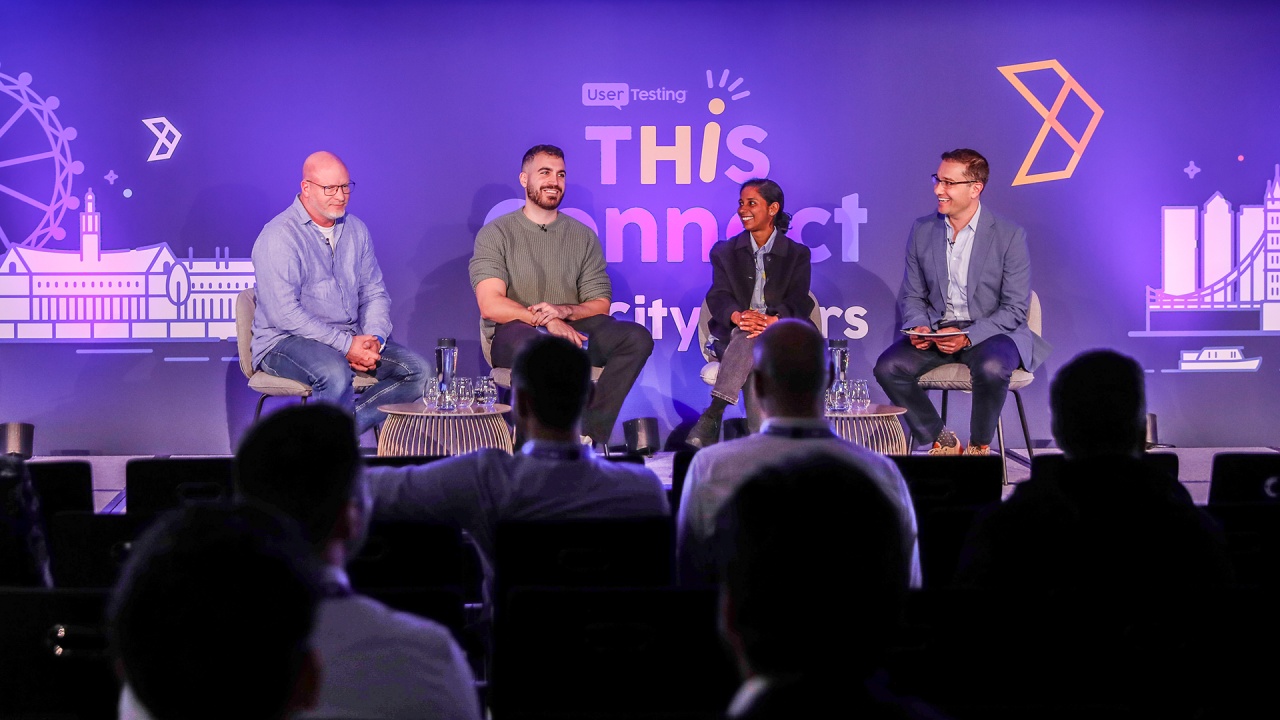
You know who's fixing stuff like that and who's asking the questions and sticking around long enough to listen? It is our next speaker who I actually we got a sneak peek. Us analysts in the room got a sneak sneak peek of what Brad Carrera is gonna talk about. So Brad, come on up here. Stage is yours.
Speaker 2
Alright. Well if you sign up for the user testing panel, we can formalize that feedback and hopefully fix it for you.
Absolutely. Well, thank you everyone for coming. It's always so great, so energizing to get...
Speaker 1
You know who's fixing stuff like that and who's asking the questions and sticking around long enough to listen? It is our next speaker who I actually we got a sneak peek. Us analysts in the room got a sneak sneak peek of what Brad Carrera is gonna talk about. So Brad, come on up here. Stage is yours.
Speaker 2
Alright. Well if you sign up for the user testing panel, we can formalize that feedback and hopefully fix it for you.
Absolutely. Well, thank you everyone for coming. It's always so great, so energizing to get in a room with like minded, curious individuals. I know coming out of conferences like these, I always feel very seen, very, oh, I'm not crazy, this idea.
Other people have it, too. Maybe I'm onto something here. So I appreciate everyone taking the time to be here. And a big shout out to User Testing for putting on such a cool event and bringing us all together.
Yeah, maybe we give it up for them just for a quick moment here.
Absolutely. Well, I am here to talk a little bit today about not AI.
I know it's very, very interesting, but I want to talk a little bit about something that I truly believe that cannot be replaced by automation. It can't be replaced by a large language model.
You can crunch all the data sets you want, and you're still not going to get the value of what I'm going to talk about here today with you all. So thanks again. And oh yeah, thank you user testing for putting me on right after the magician illusionist. I really appreciate that.
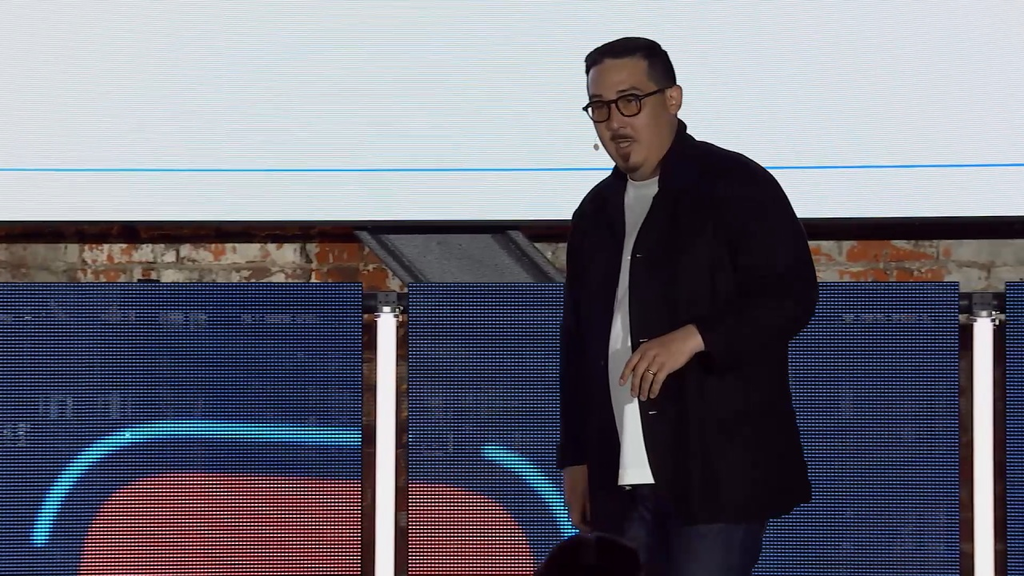
I have zero magic tricks to show. Okay. So let's keep going here and stay on time. So I'm Brad Carrera.
I work for McDonald's. I've been there for about five years. Before that, I was at a small agency, a small full service digital boutique agency where I was hired as a researcher, had to get involved in sales, did a lot of marketing, moonlighted as a product manager.
And thank you for holding your booze on that too. I do appreciate it. But I wouldn't trade it for the world because it really helped me understand where those people are coming from, how they're judged, the tensions that they have. So it was really, really, really helpful for me.
But the main thing I'm here to talk about today and to tell you all is that you might not know it yet, but you all, you're glue. You are glue, and you can be the best glue version of yourself that you can imagine. And if you do embrace your glueness, which we're allowed to invent words here, right? We understand what I'm talking about.
This is how you scale your influence as a researcher, is by bringing people in, by creating shared understanding, by not working in a vacuum. And it's a key piece that, again, you can't plug into Gemini to fix. So I want to tell you a little story about our journey over at McDonald's and my time there, and I've broken it out into a few acts. So for the first act, we had research.
We did when I got there.
Specifically, we had one researcher, an external researcher, and
Speaker 1
they did what they were hired to do.
Speaker 2
They did a good job at it, too. So I won't fault them. I really enjoyed them. They did important work.
They ran usability tests. They found issues. They came back, report in hand, ready to provide their recommendations, a bullet point list, all that good stuff. They did what they were hired to do.
But what we didn't get to, and what I noticed right away, is that making a recommendation to move the button to this place, to separate the information in this way, to make the stuff on the page visible at a certain point. It didn't help our people understand how our products, how the things that we're making fit into and matter into the context of our customers, our users, in the context of their life. And for a place like McDonald's, our product is not our app. It's not our kiosk, the things that we work on every day.
Our product is the burgers. Our product is being able to be on your way from one practice to another, have five minutes and get something to eat or drink in a timely, predictable fashion and not get stuck doing a crossword puzzle or whatever she was talking about.
So we had research. On paper, we had it. We had one of them. The problem was research was extremely transactional.
I'm sure some of you all can relate. We would get requests. Have you heard this one? Hey, can you validate this for me?
You all have heard that one before, right? And my answer was usually, maybe. We'll see. But requests came in, reports came out. Very transactional. Okay? Research was also isolated.
So again, the intake form comes in. Researcher goes away for a couple sprints, comes back, report in hand. Here's how you fix it.
That's what we had. It was on an island.
It was very again, no contextual awareness. No real in the weeds kind of stuff. But we had it. We had it. We had one of them.
Okay? But the main thing we didn't have was understanding.
Okay? And for our product, our service, understanding, shared understanding is paramount. We never gave our stakeholders, our partners, our collaborators the tools they need, the opportunity to actually hear customers stressing out, to actually see them trying to use our app while there's three kids in the back screaming, kicking the back of their seat, and they're just trying to get a burger in their mouths in the next ten minutes.
So no one felt that tension. It wasn't real.
No one saw the reality of how people are actually using our tools. And because of that, the influence that the researcher, the burgeoning research team had, it never spread. It was purely factual. At times, it felt like we were creating answers to trivia questions.
But the really the thing that we would notice on our own, really important, really impactful, there was a big struggle to create excitement about that, to get it prioritized. And that's because it existed in a lab. It existed on a screen. It never existed in the restaurant, in the field, behind the counter.
And that really kind of backed up our influence.
All right. So if you take away one thing today, it's that getting a report does not equal is not the same as experiencing your customers, Okay? You might learn facts about how things perform. You might learn about what's findable and what's not. But the real value, where you really start to scale your influence, is by helping people experience their customers, their users, the crew members that are using these tools.
Okay?
All right. Act two. We had a researcher. We had one more when I joined. But now, I want to talk a little bit about building your influence in a big company.
So I'm sure some of you all work in equally large, larger companies than this. Maybe some are smaller. But within McDonald's itself, it's about influencing a system within systems.
And obviously, you know, influence by authority is not influence, right? That's compliance.
And compliance leads to coups and things like this. So influence by authority really isn't an option. It's not real.
And it's especially not real at the old burger shop here, where we've got forty thousand plus restaurants in over one hundred countries. Multiple corporate offices. I actually shortchanged that corporate employee figure by about one hundred and forty five thousand. So just a little disparity right there. Almost two million crew members.
Also, the other thing that we need to consider is that our restaurateurs, our owner operators, they signed up to run a restaurant because they don't want to have a boss. They want to be the boss. So us as global, we can't tell them what to do. What we can do is help them believe in what we believe, and help them understand in a way that we understand, and help them kind of see that from the beginning.
So within these kind of companies, obviously decisions travel. I'm sure you talk to a lot of these folks, maybe minus the restaurateurs, depending on what area you're working in. But we all know how the telephone game goes, right? Interpretation changes.
Facts change. As decisions travel, especially if you're just getting a deck with a bunch of bullet points in it, that interpretation absolutely changes along the way. So what do we do? What happens when that happens?
What happens there is opinions become facts. And when opinions become facts, what happens next? You hit an impasse. The thing that you're really passionate about, that you really believe in, sits on a shelf. And then the next priority, the next big thing, the next shiny object that your leaders want to chase, that becomes the new priority. So I can't stress enough the importance of the shared understanding, getting on the same page, believing in the same thing.
Okay. And what we realized, just based on the requests that we had coming in at that time, is that us as researchers, design research itself, sits at the center of all of these different groups. Marketing might not ever talk to product. Franchise leaders may never actually talk to designers, but we're talking to all of them. And what we needed to do was embrace that position. Embrace being at the center of all that, and doing the work that was necessary to bring these people together into the process.
All right. So what does that actually look like in practice? Glue work, as I like to call it here.
So the first thing I'll say is the work you do is sticky, right? I challenge you to find a stakeholder. As long as you've done your part, your due diligence and that's table stakes. That's why I'm not talking about methods or any of that kind of stuff.
As long as you do your part, you'd be hard pressed to find someone that says, let's never do that again. What is the response? When can we do more? When can you dig into this thing that I'm interested in?
The work that you do is fun. It's exciting. Sometimes it's a little scary. But it's different than what a lot of your coworkers, a lot of your stakeholders, a lot of your collaborators are to do.
You're pulling them out from behind their desks, and people like it.
So when you're first getting started like we were, and you're doing this kind of glue work and trying to bring people together, I won't lie to you, sometimes it feels a lot like this picture I found on Reddit that's labeled random crap glued to a board.
And it might feel like that. And the people that you're reaching out to and bringing in, they might feel like that. Why are we talking? I just give you the requirements. You all make it happen. You make sure it works.
It's going to feel like this a little bit in the beginning. But as you progress, it starts to feel a little bit more like this, right? As your network grows, as you start bringing people into your process, it feels more like finding that last kind of missing piece that gets you across the finish line, that completes a puzzle, that makes your vase able to hold water again.
And in reality, the boots on the groundwork that you have to do involves this.
Networking, relationship building, sending a Teams message to a person who's never heard of you, and asking for a little bit of their time, right, to understand what's important to them. What questions do they have? How are they being judged? Who can they introduce you to where they might not have a stake in your game, but they know the guy, the lady, the person that does. And so what I have really pushed on my team is to all right, I'll talk about AI a little bit is to use AI to create efficiencies, to create more time in your day, but dedicate that time to this work.
Because this work cannot be replaced by any automation. You have to do this yourself. And the good news is, as researchers, this is kind of what we do, right? This is kind of naturally in our skill set to be curious, to genuinely care about what people are going through, and to find out more the things that you don't know.
So be courageous. Look at your org chart. Reach out to people you don't know. Get them to talk to you, and keep that going.
And in practice in the field, this is a little bit what it looks like. And to kind of match you up to that weird web diagram that I showed, I'm the dude that was taking the picture, and then here's my web of connectors here that I glued together. Our product manager, Ash, our designer. That's Laura there. And then we have our friend from US Digital, which is a completely different entity and organization than us at Global. But what I did was say, hey, we're all going to the restaurant. We're all going to get in the car with some customers.
And then we're all going to debrief together. And a big shout out to user testing here for helping us also broadcast this out to the larger organization.
Again, researcher in the center of this group. And I'm sorry, our product manager here, who I forgot to put a bubble on here, is sitting right next to her. But designers, product managers, researchers, sitting together with customers. It doesn't have to be every time, but you have to make time for this kind of a thing. And this last picture, I know, I'm kind of hammering this point home here, but I'm particularly proud of this one because this young lady here, Luciana, is fairly new to the organization. This is when she was about six months in.
Extremely talented, extremely ambitious. I mean, she is just fantastic. And I threw her immediately to the wolves and said, no, you're not doing any research in a lab behind closed doors. We're sending invites to the product director that has a ton of stake in this game, that has a ton of stake in your project.
Our head of design, Okay, who you haven't even really met yet. Our tech lead is also there. Our designer, obviously, and our customer here. And I know this is a little Spanish Inquisition y in terms of the amount of folks in the room here.
But we did a good job of putting some shiny in front of them to keep them distracted. And the one thing that I will say is that our head of design is here not to make sure that Luciana is proficient.
Okay? She's not here to make sure Luciana is a good researcher. We're past that. She's here, Erin, our head of design, so that she can tell a firsthand story to her stakeholders, to her bosses, so she can speak passionately about what she saw. And we're going to help her interpret that, obviously.
But this is the value that our leadership team is getting out of this as well, so that they're not just regurgitating points on a slide. They're telling a firsthand, passionate story about the things that actually experienced.
So again, think about the ways that you can be at the center of this web, bring people in, glue them to your work, create these opportunities for building a shared understanding. Because if you're waiting to expose your work to these stakeholders, to these folks, waiting till the deck is complete, they're not going to see themselves in that work.
And that's what you need to build the shared understanding. You have to get in touch with them to develop your question set. You have to get in touch with them to invite them to the session to see it, to observe it, to debrief, take pictures of them, I got it over there, with the customers to put in the deck. Because when you get to the point where you're making your recommendations, when you're communicating your insights, they're now a part of that. They now share that understanding because they help you develop it. You're not just forcing it on them, And that's how you scale your influence. That's how you make your skill set in demand, and that's where you up your stickiness.
All right. Act four. We're getting there. Only two more.
From service to system. So again, we started with a very small team, Okay?
Once we started doing this kind of work, demand skyrocketed. And I promise, if you do this kind of stuff in this way, that will happen to you as well. But what we realized is that centralizing that skill set, centralizing research itself, it doesn't scale. What does it do?
It bottlenecks. Okay? And we all know people have very short attention spans. They move on to the next thing.
This does you an extreme disservice to play gatekeeper to research.
Okay? You need to be able to hand those tasks off.
Make time for yourself to do the deeper, more important, contextually relevant, in the weeds type of work. So we shifted from doing research for teams, to building research capabilities within teams. So what does that mean? Another shout out to user testing, who helped us a ton with getting all this infrastructure set up.
It means letting go of these kind of precious things, running a usability test, being the only ones that do that, and empowering your team to do good work quickly with very little oversight. That's the goal. It's to help them get to high quality results quickly on their own. And we're still here, we talk to them.
If they message us, we don't just put them on mute when they have a usability test question. But this is the kind of setup that you need to shift from being a gatekeeper to being the glue that helps people develop these kind of shared understanding and shared empathy for your users, your customers, things like this.
So I know, such a deep statement here. My director only made fun of me briefly for putting this in. But you're definitely more than the number of decks that you create. And you shouldn't be measuring your output by volume. What is the value that you're providing?
And it's not fifty decks with bullet points. That shouldn't be your goal. It's how are you shifting people's minds? How are you helping them think about your customers, your experiences? The crew people that use your products, how are you helping them think about that differently? How are you helping humanize them? How are helping them really understand the realness behind using your tools?
All right. Last one. From output to influence. We still make decks, also, just so you know.
But not as many. All right. So again, this is so important to understand, is that you know, again, the shared understanding piece is how you up your influence across your organization.
Okay? It's how you help your teams make better decisions faster, more confidently, is by getting into the weeds a bit more with them, and helping them experience it for themselves.
Okay? Here's our web. I'll skip through it.
So again, bring people in. Don't be afraid that they're going to crush your project, that they're going to make it their passion project. But help them inform your areas of inquiry. Help them understand why you're picking the method that you're picking, and help them see it firsthand.
And video clips are great, but if you can get people out there in the field, that changes the way they think about what you do, what our customers are going through, and the craft at large. And really what you need is to build that belief across these teams. Force them to talk to each other. Force them to go out together and build their relationships as well.
So we started with one, and we shifted. We shifted from a volume of output, a report driven transactional system, to where we are now, where we're focused on understanding, where we're focusing on shared beliefs, where we're focusing on consensus to bigger things.
And we've scaled from one to actually twelve full time embedded researchers at this point because our demand shot up. And this was just in a couple years, and something I'm really, really, really proud of. Because it was a big fight to get just a couple researchers, and then we hit kind of a network effect. And we're able to jump up to a dozen of us.
So I guess the last thing that I'll leave you with is, you all are the glue. You all are the glue that can bring your people together, rally around your customer, rally around your users.
And in these big complex organizations where people have competing understandings, competing motivations, different measurement systems, that kind of shared belief, shared understanding, not only about what you do, but about the conclusions that you all as a team are coming to, scale of influence. That is the infrastructure that you are able to help build, and help establish, and help your organization keep moving forward. So thank you for your time. Appreciate it.