


Should UX professionals get a PhD?

There are a lot of opportunities for UX professionals to learn more about the field. There are various certifications, courses, and classes that can help you understand frameworks, trends, and strategies to use in the space.
But should UX professionals get PhDs? A PhD is obviously a large commitment, but it also allows you to go deep into research, exploring important tenets of UX that can strongly influence a UX career.
Benefits of a PhD
Holding a PhD helps you stand out
According to the 2016 UXPA salary survey, only about 10% of respondents have earned a PhD level of education.
Because it’s uncommon, having a PhD can help you stand apart from other job seekers. Many employers recognize the skills and passion that a PhD requires and are eager to bring experts on board.
If you run your own UX consultancy or work as a freelancer, a PhD can also help communicate your expertise and value to potential clients. In a field where the definition of UX is hard to pinpoint and people come to the table with a bunch of qualifications, having a relevant advanced degree is a wonderful asset.
PhD skills are valuable
The skills learned in grad school nicely transfer to UX research and strategy work. Those with PhDs are often problem solvers who are good at learning new things — new terminology, new concepts, new software, new processes, or whatever is needed to get things done.
Grad school also cultivates specific skills that are useful in UX work, like writing, speaking, and justifying decisions. For many PhDs, most public speaking will feel easy compared to orally defending a dissertation to a PhD committee.
PhDs have also learned to be very efficient. As grad students, many have to learn to multitask a heavy load. They took graduate courses, did scientific research, taught classes or labs, spoke at conferences, wrote journal publications, and worked with student or professional organizations. They now get things done quickly because they've learned to juggle multiple projects.
The downside of a PhD
PhD programs are time consuming and costly
PhD can take up to eight years to complete. Programs can be a shorter term, but you can count on turning over at least five years if you start from the level of a bachelor’s degree.
If you already have a good career going, it might not make sense to step away.
Grad school is very intensive with little time for outside activities. In traditional PhD programs, it isn’t feasible to work another job while enrolled in a program. Some programs actually prohibit outside jobs, especially if the department is funding you.
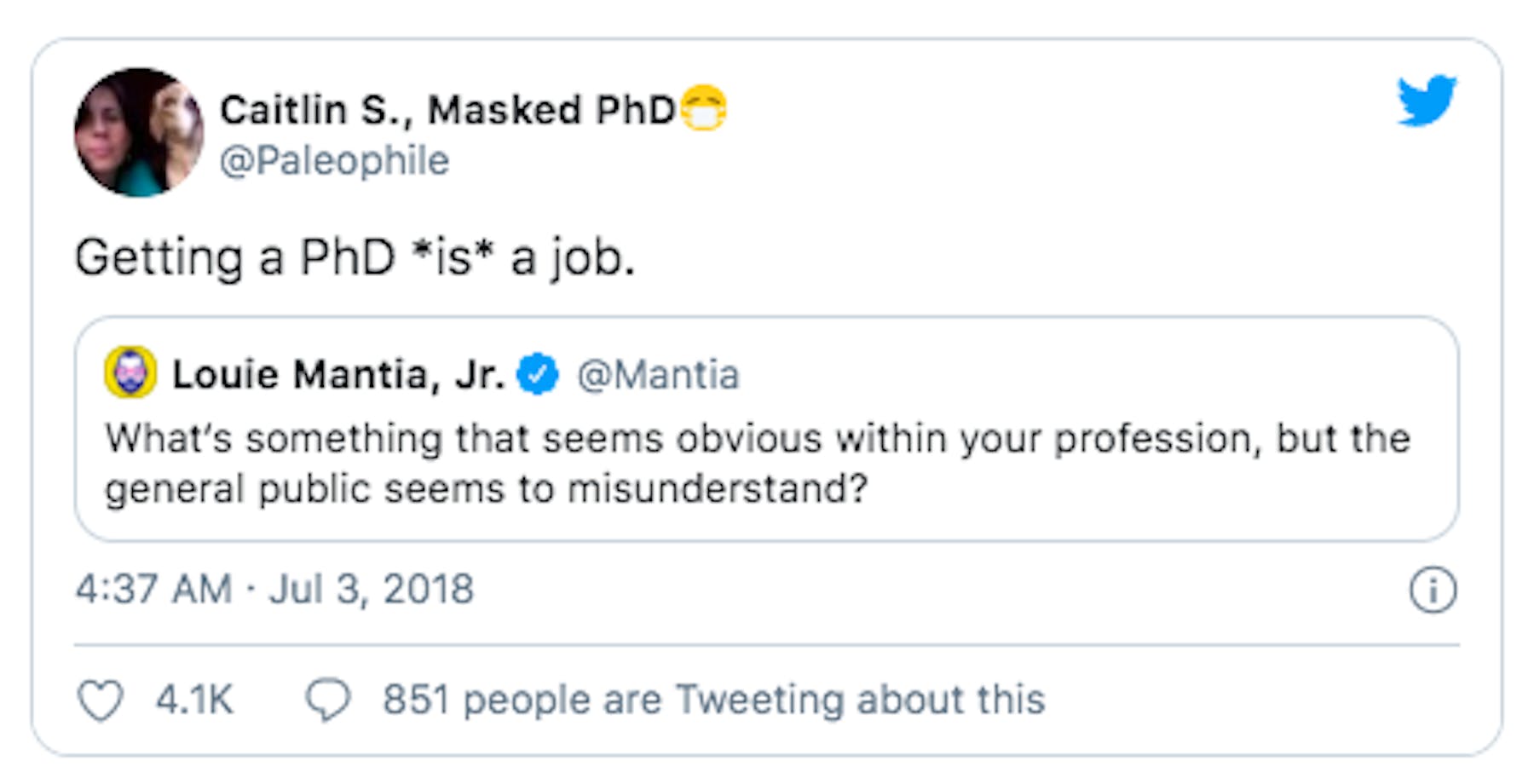
In short, a PhD forces you to temporarily sacrifice a lot — income, work opportunities and time with friends and family. This can lead to great outcomes eventually, but it can be slow and difficult process.
Many people agree that they often tell people that a PhD is probably not the best avenue for all UX researchers. None of them regret getting theirs, but there are so many other paths into UX that are more pleasant and direct.
How do you decide whether to pursue a PhD?
When considering the PhD, there are many factors to consider. Here are some things to think about:
- Passion: Don’t go after this degree solely because you think it will lead to more money or prestige. It probably will, but you are unlikely to stick with it if you don’t truly love research for the sake of learning new things. Getting accepted into PhD programs can also be a challenge — you have to prove your passion to even have a shot.
- Type of program: This article specifically refers to PhD programs in social sciences, which are a wonderful segue into UX research. But there are other avenues to consider. Look at master’s programs and certificate programs to see if those will better give you the skills boost you want.
- Cost: Even in the US, it is typical for PhD programs to fully fund students with a tuition waiver and stipend. This is great, but keep in mind that your grad school income is very low compared to full-time UX jobs and you might need student loans to supplement your income, depending on your financial situation.
- Location: Are you willing or able to move? Are you looking to start a career in a new city or country? Or can you find a nontraditional online education that better suits your needs?
- Advisor: As a PhD student, you work very closely with an advisor, meaning you need to be fully invested in whatever their research interests are. Make sure you apply to programs and advisors who will be a good fit and be certain that you and your potential advisor are compatible interpersonally and professionally.
- Culture: PhD students also work closely with one another. Many programs are very small, with only a few students per cohort. Get to know existing students and get a feel for whether the culture is a good fit for you.
- Other personal factors: For example, having a spouse or partner who can help cover bills and household duties can be very helpful. But do you have young children and not want to be busy all the time? Or do you have other commitments that you are unwilling or unable to give up during a PhD? A lot of personal factors can determine whether a PhD is right for you, and none are right or wrong.

Try MCP
Use UserTesting's MCP server to recruit participants, create studies, and launch tests from Claude, ChatGPT, Figma Make, and other AI clients.