


Episode 230 | July 06, 2026
Shopper Context Protocol: keeping brands in AI commerce
Cordial's Matt Howland on the Shopper Context Protocol, AI agent commerce, and how brands can keep customer context as AI agents start shopping.
When the checkout disappears, who keeps the customer?
Somewhere in the last two years, shopping quietly split in two. There's the version most of us still recognize—browsing a site, adding to cart, checking out—and there's a newer one, still taking shape, where you simply tell a chatbot what you want and it handles the rest. Matt Howland has spent the past year trying to make sure that second version doesn't leave brands standing outside their own stores.
Matt is the chief product and engineering officer at Cordial, and he chairs the working group behind the Shopper Context Protocol, or SCP—an open framework built to keep brands in the loop as AI agents start doing more of the shopping for us. He joined Nathan Isaacs on the Insights Unlocked podcast to explain why that loop matters, and what happens if brands get shut out of it.
The problem nobody priced in
The story starts, as these things often do, with a well-intentioned idea that had an unintended side effect.
When OpenAI and Shopify introduced the Agent Commerce Protocol, or ACP, it solved a real problem: how do you let someone buy something without leaving a chat window? But in solving it, Matt noticed something missing. "It was really, what are your products? Here's a cart and here's a checkout," he said. The brand itself—its merchandising, its relationship with the shopper, its sense of who that customer even is—had been quietly stripped out of the transaction.
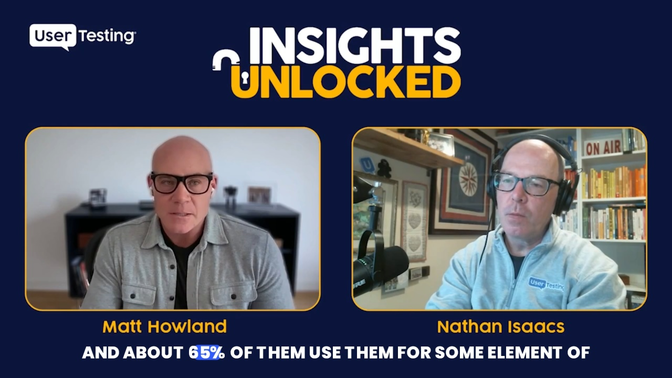
Matt calls this a context-less transaction, and it's a useful phrase precisely because it names something that's easy to miss in the excitement around agentic commerce. Speed went up. Friction went down. But the thing that makes a shopping experience feel like it belongs to a brand—memory, familiarity, relevance—evaporated in the process.
Think of it like ordering coffee from a vending machine instead of your regular barista. You still get the coffee. You lose everything else.
ON-DEMAND WEBINAR
Winning repeat customers: How retailers can optimize every digital touchpoint for more conversions
Building a bridge, not a rival
SCP wasn't designed to compete with ACP or with Unified Commerce Protocol, Google's rival standard known as UCP. It was designed to sit alongside them, restoring the piece they'd left out: durable, transferable customer intent.
Matt described the goal plainly: brands needed "a discoverable, secure protocol that really pulls in that customer context." The idea is simple enough to explain at a dinner party. If you've been searching for boots for a rodeo trip, that intent shouldn't vanish the moment you leave the chat window and land on a retailer's site. It should travel with you, the way a good salesperson remembers what you were looking for last time you walked in.
It's worth pausing on how quickly Matt built the first version. He got SCP running on the rails of MCP, the Model Context Protocol, in about a week. That speed is itself a small data point about where we are in this moment—the tools for building new standards have become almost as fast as the problems that demand them.
Interestingly, Matt isn't precious about SCP's survival as a standalone standard. He said he'd be happy to see UCP absorb much of what SCP already does, since UCP has "a place to get loyalty information" and is evolving quickly. That's a notable posture for someone who built the thing. It suggests the goal was never ownership of a protocol—it was making sure brands had a seat at the table before the table was finished being built.
The walled garden, again
If you've watched digital marketing long enough, you've seen this movie before. Search engines, then social platforms, each promised open reach and then, gradually, closed the gate and started charging rent to get back in.
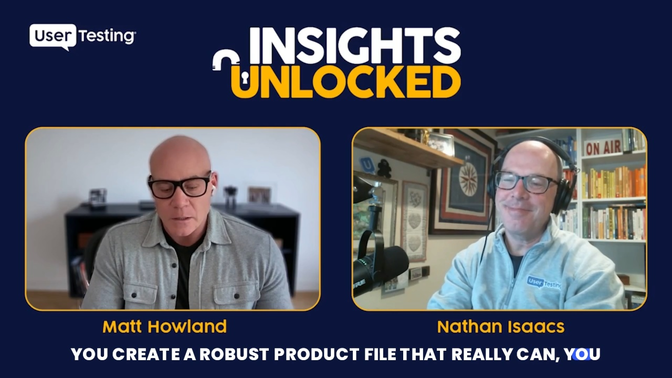
Matt sees the same pattern forming in AI agent commerce, and he's blunt about the incentive behind it. Platforms that control the transaction can also control who gets seen first—and charge accordingly. "It's going to come down to who's going to pay me the most to show their products first," he said. Left unchecked, that dynamic turns every AI shopping assistant into another walled garden, with brands paying a new kind of tax just to remain visible to their own customers.
The stakes go beyond marketing budgets. Loyalty programs—the accumulated trust and history between a brand and a shopper—depend entirely on brands being able to see and use customer context. Strip that away, and loyalty becomes something only the platform can see, which means only the platform can monetize it.
Try MCP
Use UserTesting's MCP server to recruit participants, create studies, and launch tests from Claude, ChatGPT, Figma Make, and other AI clients.
What leaders should actually do
For all the protocol talk, Matt's advice to leaders trying to prepare their organizations for agentic commerce was refreshingly unglamorous: start small, and start with curiosity rather than a business case.
He's seen the biggest wins at Cordial come not from top-down mandates but from employees who cross functional boundaries—someone who understands both product and customer experience, for instance, spotting a problem neither team could see alone. Give AI the well-defined, repetitive work, he suggested, and use the time it frees up to go looking for the next problem worth solving.
It's a modest-sounding strategy for a moment that feels anything but modest. But modesty may be the point. Nobody in this conversation—not Matt, not the protocols racing to define agentic commerce—actually knows how this settles. The brands that come out ahead won't be the ones with the boldest bets. They'll be the ones still holding the thread of context when the dust clears.

As Matt put it, reflecting on the pace of change he's watched from inside Silicon Valley since 2000: "We truly are inventing the future… now is your chance to shape what the next years are going to look like."
Episode links and resources
- Matt on LinkedIn
- Cordial
- Shopper Context Protocol website
- Webinar: How real shoppers use AI to buy — video clips of real shoppers using AI to find, compare, and decide what to buy across categories like skincare, travel, and apparel.
- Guide: Designing AI-powered shopping for next-gen commerce — a practical guide for eCommerce and digital leaders on designing AI-enabled shopping features that build trust, preserve brand differentiation, and prepare for agent-to-agent shopping.
- Podcast episode: Conversational AI and agentic AI in customer experience — an Insights Unlocked episode exploring how agentic AI is changing customer journeys and what teams must do to stay competitive.
- Blog post: The rise of AI personalization marketing in modern commerce — a look at agent-to-agent commerce, what it means for brand visibility, and how brands can stay trusted when algorithms curate the options.
ON-DEMAND WEBINAR